

5 things to know about Claude Monet
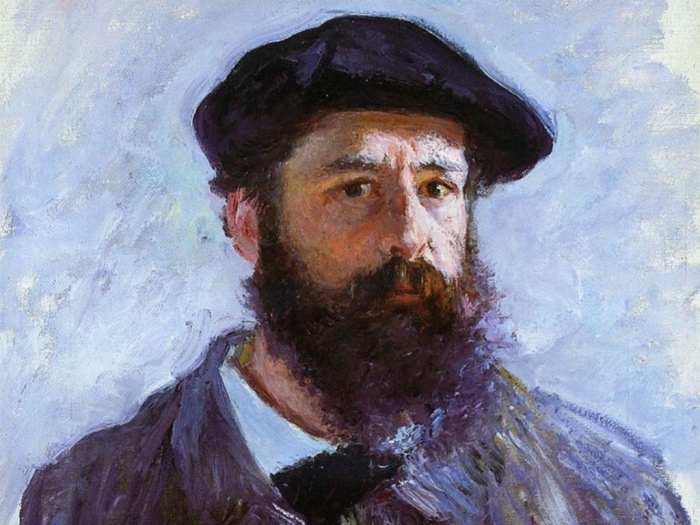
Claude Monet, Self-portrait
Hello! Have you ever thought about how fascinating Monet’s world is, today more than ever? Reliving his artistic discoveries through contemporary events and insights brings out an art that is never “old.” I’ll take you inside Monet, into the beating heart of Impressionism, with new curiosities, unmissable exhibitions, and brilliant reflections.
5 THINGS TO KNOW ABOUT CLAUDE MONET
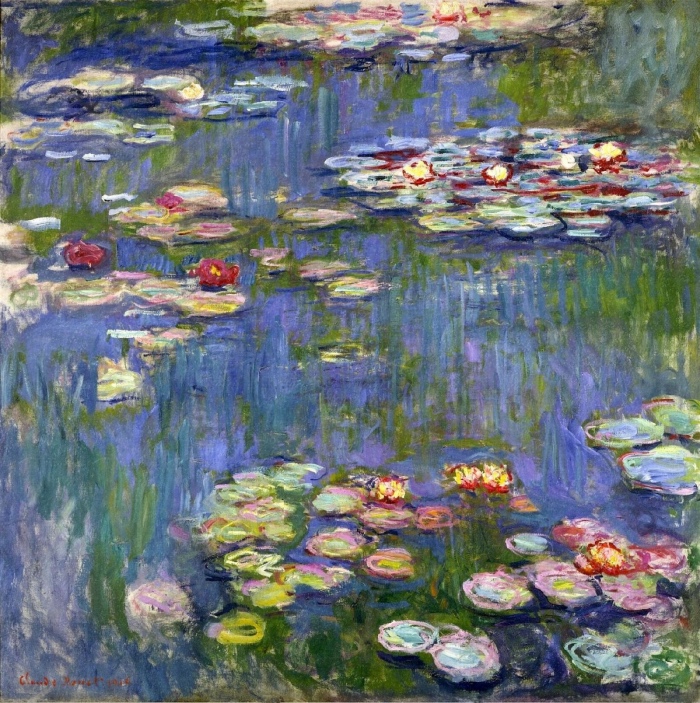
Claude Monet, water lilies.
Claude Monet is the father of Impressionism and a key figure in understanding the transformation of art between the mid-19th and early 20th centuries.
Even today, Monet‘s works continue to inspire enthusiasm among many art lovers, and exhibitions featuring his masterpieces are guaranteed to be a success.
Here are 5 things to know about Monet’s life.
1. Monet’s birth and early life
Claude Monet was born in Paris on November 14, 1840, but spent his early years in Le Havre, where he began drawing caricatures and was noticed by E. Boudin, who convinced him to devote himself to landscape painting.
Monet was not immediately the “painter of light”: as a boy, he was noted for a very particular talent… caricatures!
Monet was a restless, dreamy, and stubborn teenager. He rejected academic art and refused to copy ancient models. At school, he drew his classmates and teachers incessantly, sold his sketches in local shops, and began to make a name for himself. They called him “the caricaturist of Le Havre,” and that is how he was noticed by Eugène Boudin, a local painter.
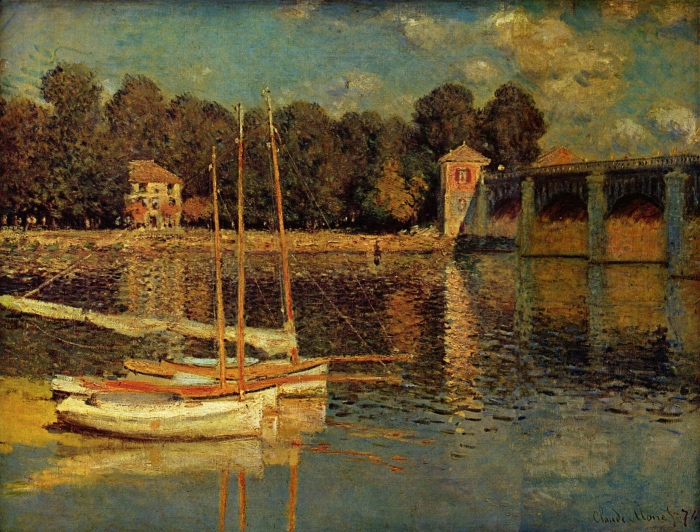
Claude Monet, The bridge at Argenteuil (1874)
2. Monet’s training
Moving to Paris in 1859 against his father’s wishes, Monet studied at the Académie Suisse, where he discovered the paintings of Delacroix, Daubigny, and Corot and met Pissaro, Bazile, Sisley, and Renoir, with whom he began painting “from life” in the forest of Fontainebleau.
In his early years, Monet did not have a happy life, especially from a financial point of view, and in 1869 his creditors confiscated all his paintings, leaving him unable to paint due to a lack of colors.
After the death of his wife Camille in 1879, Monet went through a period of profound crisis, but it was precisely then that many of his later masterpieces were created.
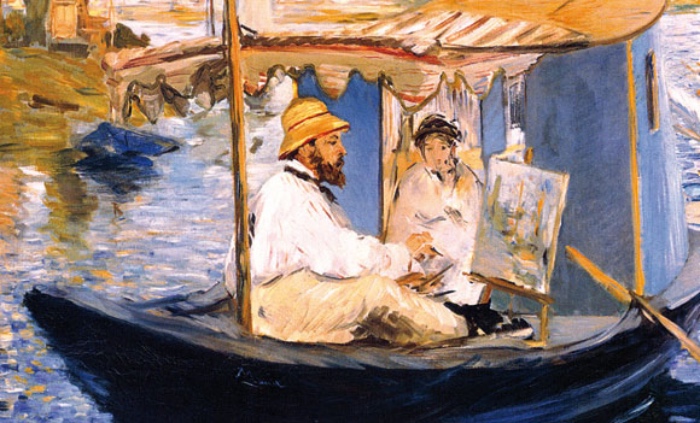
Édouard Manet, Monet painting (1874)
3. Origins of Impressionism
Monet‘s landscapes, painted with particular attention to the reflections of light on water, represent the first works of Impressionism.
It was Monet‘s 1872 painting “Impression, Sunrise,” exhibited in 1874, that suggested the name for the new artistic movement: Impressionism.
Monet broke with academic traditions by focusing entirely on color and light.
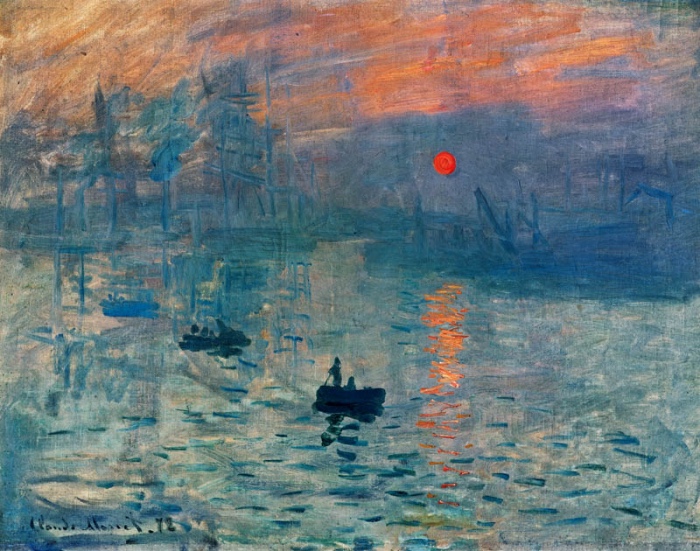
Claude Monet, Impression. Soleil levant (1872).
4. The study of light
Claude Monet explored the physical laws underlying the human eye’s perception of light and color. He studied visual perception, focusing on reflections, shadows, and temporal variations in light.
He dedicated countless variations of the same subject to the sole purpose of capturing a precise moment and a particular light that the artist could see at the moment he was painting.
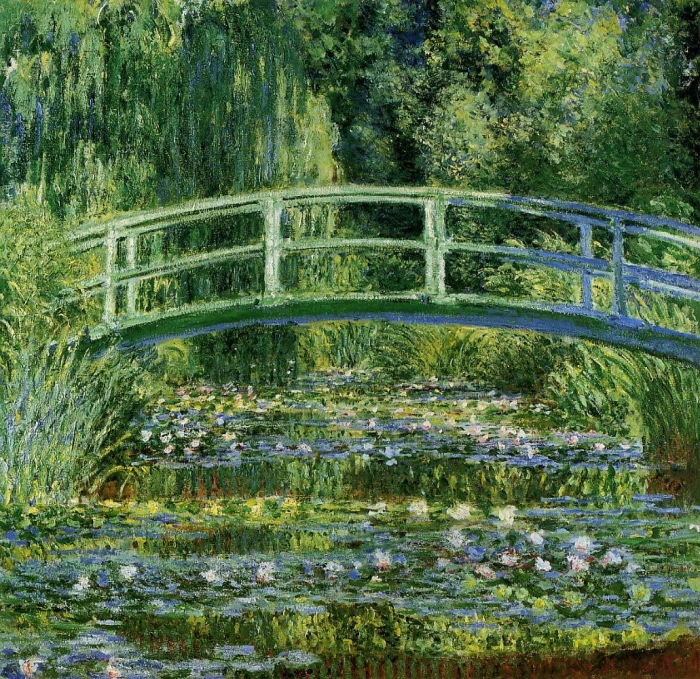
Water Lilies and Japanese Bridge (1897-1899), Claude Monet.
5. Giverny: the botanical laboratory of art
In 1883, Monet moved to Giverny, in Normandy, where he created a garden and built himself a refuge, or more simply, a world of his own, which would become the favorite subject of his works.
Claude Monet spent over 40 years of his life in Giverny and used his garden, with its plants and flowers, to create authentic masterpieces.
Since 2025, the garden has been maintained with ecological rigor, addressing climate change and preserving the rare floral species that Monet loved. The garden and house of Monet in Giverny are open to visitors and offer a deeper understanding of the works of the master of Impressionism.
READ ALSO: the post I dedicated to Post-Impressionism, where I wrote what happens next t the end of the Impressionist movement.
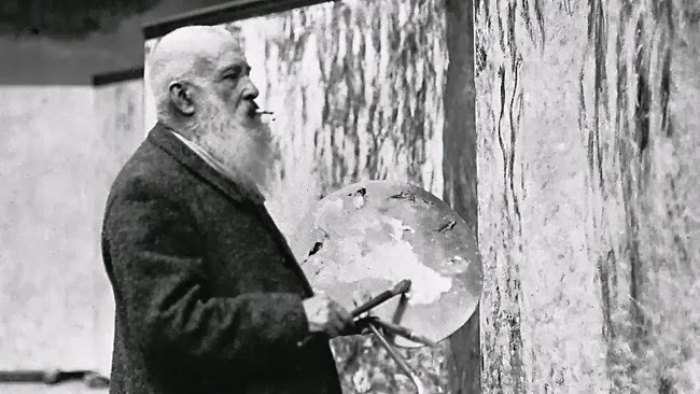
Claude Monet, 1910-26 c.
🖌️ This article was published in 2016 and was updated on July 27, 2025 with new facts, insights, and useful links.

Follow me on:
About me
In this blog, I don't explain the history of art — I tell the stories that art itself tells.