

Robert Mapplethorpe: the photographer who revolutionised art with the beauty of the body and provocation
When talking about contemporary photography, it is impossible not to mention Robert Mapplethorpe. With his bold, poetic and sometimes scandalous shots, the American artist rewrote the rules of 20th-century visual art.
Who was Robert Mapplethorpe really? In this post, we discover his biography, from his beginnings in Queens to international recognition, passing through bohemian New York, his loves, provocations and battles against censorship.
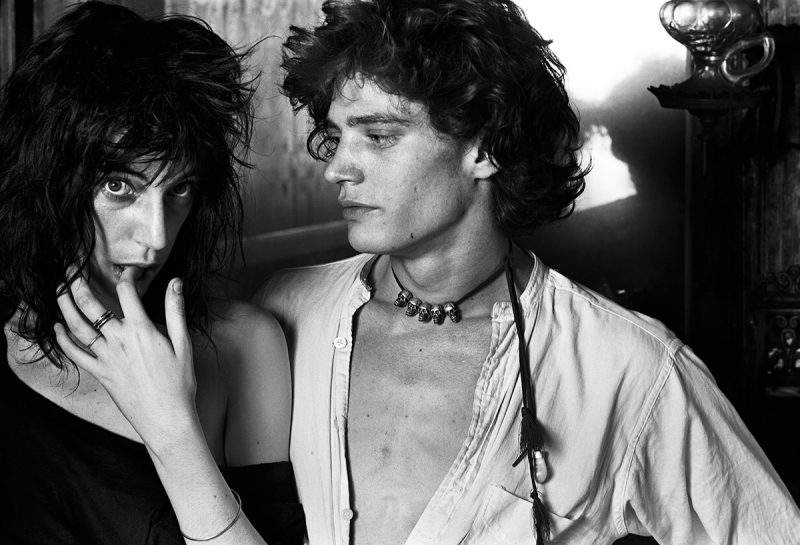
Patti Smith e Robert Mapplethorpe
Robert Mapplethorpe: from his origins to photographic genius
Robert Mapplethorpe was born on 4 November 1946 in Floral Park, Queens, into a large and very Catholic family. The third of six children, he grew up in an environment where moral conformity and guilt associated with sexuality were the norm. However, it was precisely this strict upbringing that would later become one of the creative driving forces behind his art.
Although his father was a photography enthusiast, Robert did not immediately show any interest in this medium. It was only over time that his vocation revealed itself, with an approach initially focused on painting, drawing and sculpture.
The 1960s: New York, Patti Smith and the cultural revolution
After graduating, Mapplethorpe enrolled at the Pratt Institute in Brooklyn. In a climate marked by social protests, the Vietnam War and the birth of the LGBTQ+ movements, 1960s New York became fertile ground for him. It was here that he met Patti Smith, a poet and musician destined to become one of the most iconic voices of punk.
Their deep and creative relationship would be decisive in both their lives and art.
Moving to the legendary Chelsea Hotel marked Mapplethorpe’s official entry into the underground world. Frequenting Andy Warhol’s Factory and New York’s most transgressive art venues, Robert began producing collages that mixed sacred elements and pornographic images, openly challenging social conventions.
The discovery of photography: between Polaroid, experimentation and scandal
In 1970, the turning point came when his friend Sandy Daley gave him a Polaroid camera and it was love at first sight. Mapplethorpe began to shoot compulsively and explore the communicative power of photography. The following year, thanks to his meeting with John McKendry of the MET, he came into contact with the museum’s photographic archive and fell in love with the work of Stieglitz and Strand.
Meanwhile, he formed a deep bond with collector Sam Wagstaff, who supported him both artistically and financially. Thanks to him, he opened a studio on Bond Street, in the creative heart of 1970s New York.
The body as art: eroticism, portraits and flowers
With his new Hasselblad 500C, Mapplethorpe entered a phase of full artistic maturity.
Within the walls of the Mineshaft, a symbolic venue of gay subculture, he photographed male bodies, extreme gestures and fetish objects in black and white. However, his research was not limited to eroticism: at the same time, he produced intense portraits and floral still lifes, revealing a classical sensibility and an obsessive search for formal perfection.
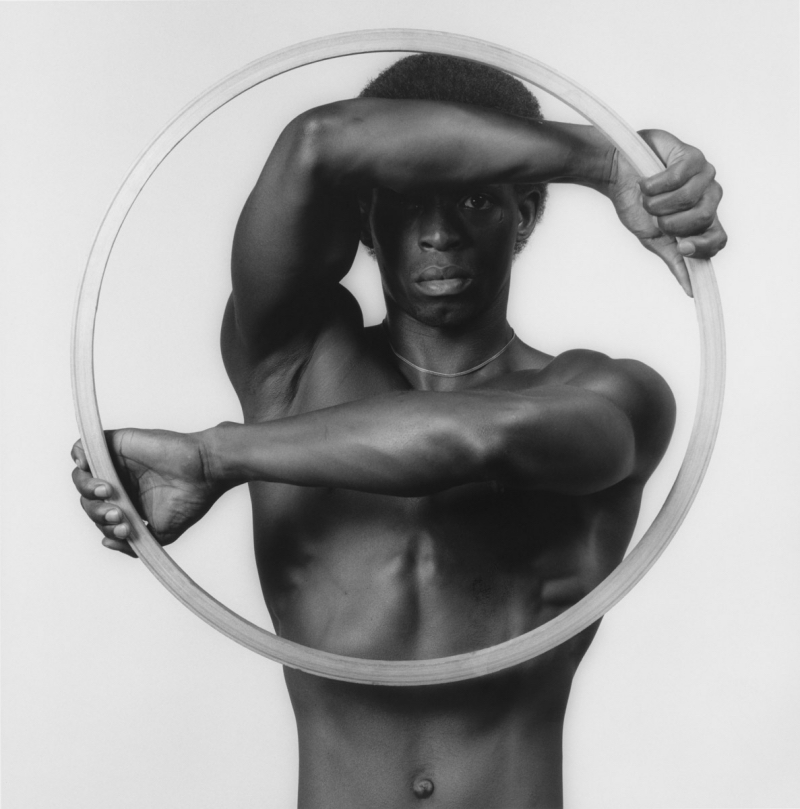
Among his subjects, Lisa Lyon, a bodybuilder with androgynous sensuality, and numerous iconic figures of queer and pop culture stand out. His famous portfolios X, Y and Z celebrate sadomasochism, flowers and African-American bodies respectively, breaking taboos and challenging all aesthetic and moral conventions.
Censorship and celebrity: the exhibition “The Perfect Moment”
By the 1980s, Mapplethorpe was recognised as an artist of international renown. However, success came hand in hand with illness: AIDS. Despite this, he continued to work intensely, promoting exhibitions and publications.
In 1988, shortly before his death, he established the Robert Mapplethorpe Foundation, which still funds HIV research and supports photography as an art form. The following year, the retrospective exhibition “The Perfect Moment” became a media sensation: the explicit images provoked strong reactions, and the exhibition was censored in several American cities, sparking a heated debate about art and freedom of expression.
A powerful and controversial legacy
Robert Mapplethorpe died on 9 March 1989 in Boston, but his work lives on.
With his refined and provocative aesthetic, he transformed the human body, often ignored or censored, into pure art.
His photographs, which oscillate between the elegance of the Renaissance and the extremism of metropolitan subcultures, redefined the boundaries between eroticism, beauty and transgression.
Even today, his images challenge us: where does art end and scandal begin? What is beauty really? And, above all, do we have the courage to look?

Follow me on:
About me
In this blog, I don't explain the history of art — I tell the stories that art itself tells.