

Ferdinando Scianna: the Sicilian gaze that changed photography
When you hear the name Ferdinando Scianna, what comes to mind?
Sicily, black and white, profound faces, a certain bitter irony… and perhaps a touch of nostalgia. All of that is correct, but Scianna is much, much more: he is a visual storyteller, a witness to reality, someone who has always chosen photography as his medium of expression.
The photography of Ferdinando Scianna
As someone who lives for art and images, I obviously cannot help but love its consistency, strength, and that typically Sicilian stubbornness that has transformed every shot into a small declaration of love for life (and its contradictions).
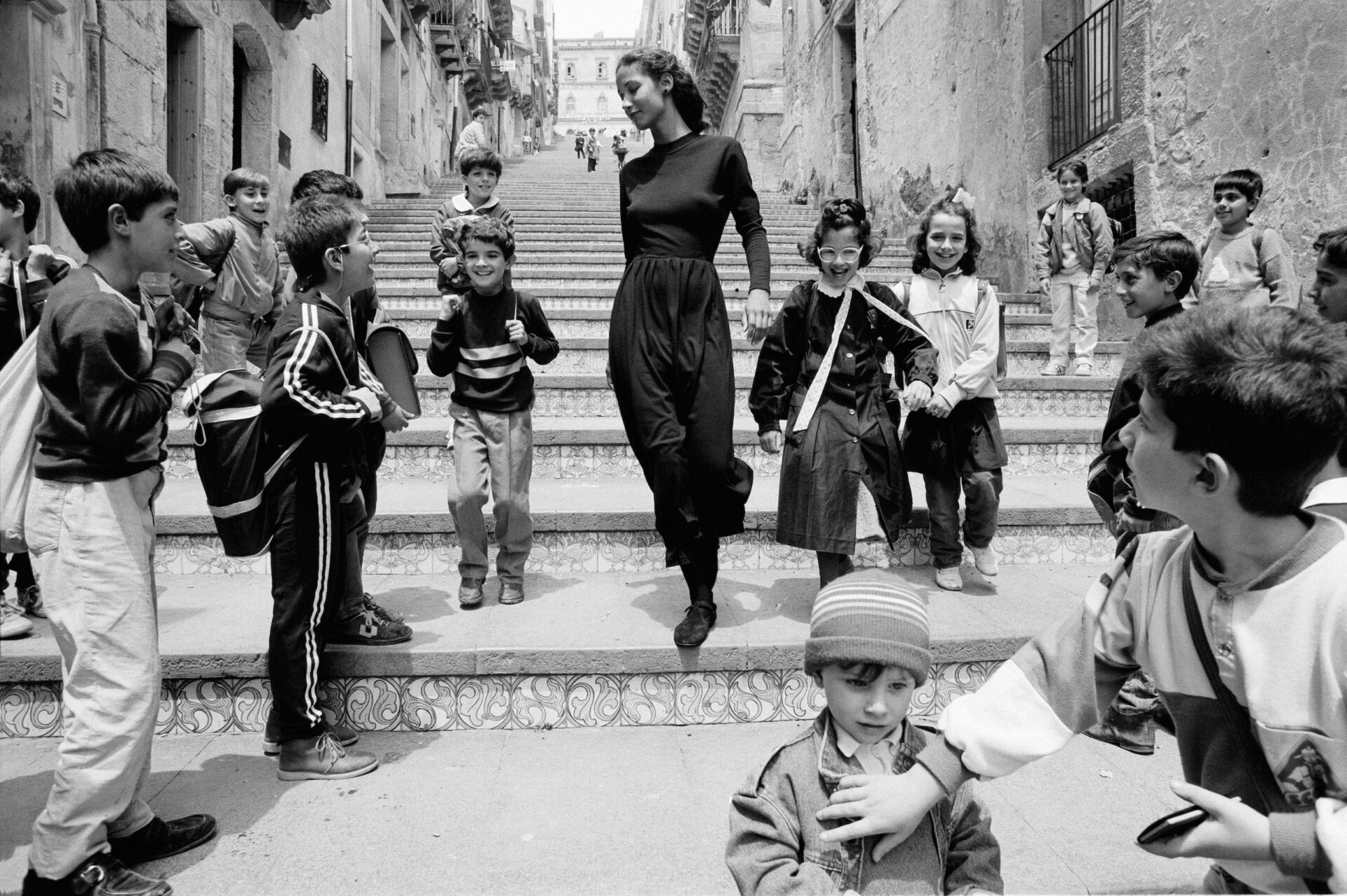
Ferdinando Scianna, Marpessa, Caltagirone 1987 © Ferdinando Scianna
The (extra)ordinary life of a Sicilian boy
Ferdinando Scianna was born in Bagheria in 1943, in Sicily, which is not just a place but a world, an open-air theater, a land of shadows and intense light. He studied literature in Palermo but soon realized that words were not enough: he needed images. At a very young age, he began photographing religious festivals in his village, fascinated by the intense faces and ancient rituals that seemed carved in time.
At the age of 21, he published his first book, Feste religiose in Sicilia (Religious Festivals in Sicily), with Leonardo Sciascia: a small publishing miracle. The Sicily that emerges is not folklore, but a theater of the soul, and from then on, Scianna never looked back.
His most important works (and why you can’t miss them)
Scianna is one of those photographers who cannot be pigeonholed. He has done reportage, fashion, portraits, and advertising, but always with his own recognizable style: rigorous, intimate, and narrative.
Among his most famous works are:
- “Feste religiose in Sicilia” (1965) – The book that launched him, with texts by Sciascia: a journey into the popular traditions of the South that seem suspended between the sacred and the profane.
- Photos for Dolce & Gabbana – Yes, you read that right. Scianna brought black and white to Italian fashion, photographing Marpessa as a modern Mediterranean Madonna. It was the beginning of a visual revolution: fashion becoming cultural narrative.
- Portraits of writers and intellectuals – From Borges to Sciascia, from Calvino to Barthes: Scianna manages to capture the soul of people, even the most elusive. He is the photographer who makes silence speak.
- “Viaggio a Lourdes” (Journey to Lourdes), “Dormire, forse sognare” (Sleeping, Perhaps Dreaming), “La forma dentro” (The Shape Within) – Books that are true visual essays. Photography as thought, as doubt, as question.
Why Scianna matters (and will continue to matter)
Scianna was the first Italian photographer to join the prestigious Magnum agency. Not bad for a boy from Bagheria, right?
However, his importance lies not only in his awards and accolades, because Scianna changed the way we see the world, demonstrating that photography can be at once documentary, poetry, social criticism, and philosophy.
His images do not shout, they whisper, forcing us to stop and look. They are images that tell stories without frills and, above all, remind us that true art does not need special effects to make you tremble.
Scianna’s free and ironic voice
And then there is Scianna, the man, the intellectual, the writer. He has written books that read like conversations over coffee because he is self-deprecating, cultured, direct, and capable of reflecting on the craft of photography with disarming honesty. In a world where everyone tries to be a “visionary,” he has always preferred to be lucid, and his reflections are a breath of fresh air.
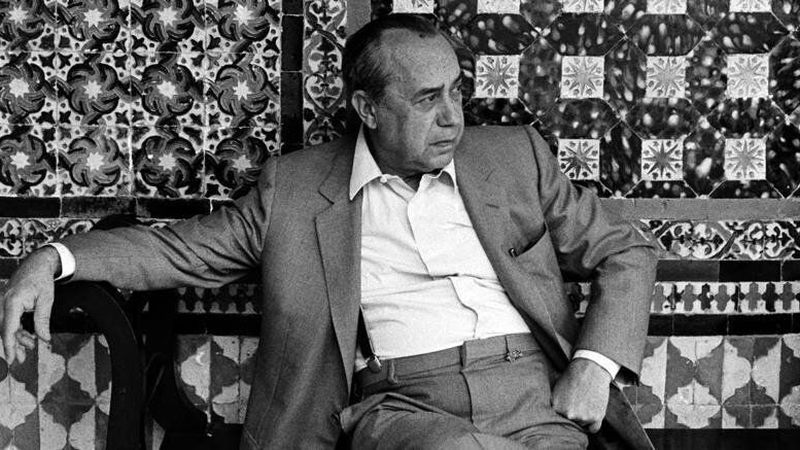
Ferdinando Scianna, ritratto di Sciascia
If I had to describe Scianna with a single image, it would be this: sitting on a chair in a sunny alley, camera around his neck, a book by Sciascia in his pocket, and his gaze ready to capture the next daily miracle, because Scianna is not someone who photographs “beautiful things” but pieces of truth.
And that, believe me, is much more difficult.
Did you like this portrait of Scianna? Were you familiar with this iconic photographer’s work? Share this post or write me in the comments which Scianna photo has stayed with you the most.

Follow me on:
About me
In this blog, I don't explain the history of art — I tell the stories that art itself tells.