

Grattage: when art is created by scraping the surface
Have you ever tried scraping paint off a surface just to see what’s underneath? Not by mistake, not to fix something… but as a creative gesture?
If the answer is no, get ready to change your mind.
In this post, I’ll explain grattage, a fascinating, rebellious, and somewhat wild technique that marked surrealism and continues to inspire artists and experimenters.
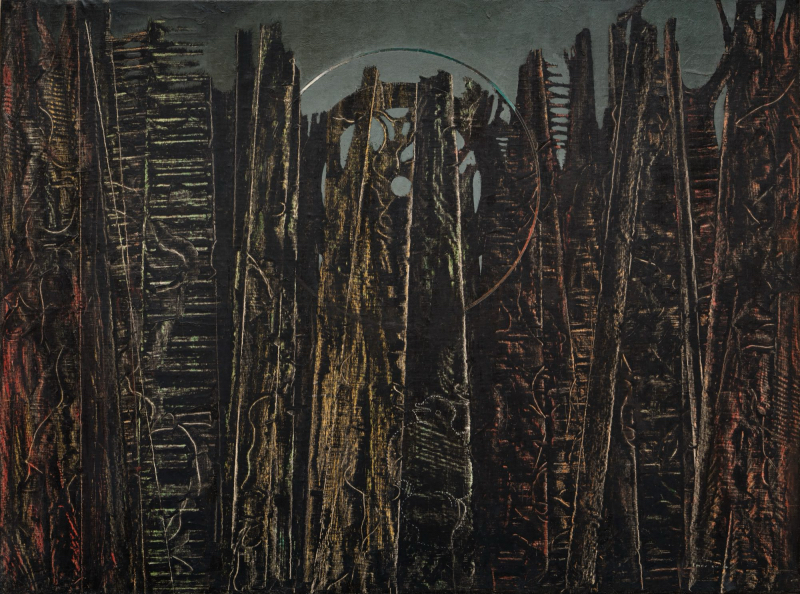
Max Ernst, la Foresta
Grattage: when art is created by scraping the surface
My first encounter with grattage was in front of a canvas that looked as if it had been scratched with fingernails. Literally. And no, it wasn’t vandalism: it was art. Art that digs, scrapes, and is not satisfied with the surface.
Grattage (from the French gratter, “to scratch”) is a painting technique in which a layer of color is spread on canvas or another medium, and then part of it is removed using various tools: spatulas, scrapers, combs, everyday objects, or even… fingernails.
The result? Images that emerge through subtraction, surfaces that tell secret stories, uneven and deeply expressive textures.
Grattage is a technique that does not add, but takes away.
In a world that often cries out “more, more!”, grattage has the courage to say “less, but better.”
Grattage according to Max Ernst
When we look at a work created using the grattage technique, we cannot help but think of Max Ernst, the artist who transformed every gesture into a journey into the unconscious.
After “inventing” frottage, Ernst began to apply the same logic to the field of painting.
With grattage, he no longer limited himself to rubbing a pencil on a surface, but began to scratch the fresh paint directly from the canvas, bringing out shapes that seemed to emerge on their own.
His works became layered visions, in which chance intertwined with gesture, and the result was always suspended between dream and matter.
Frottage vs. Grattage: the differences
At first glance, they may seem like two sister techniques, and in a sense they are, but if you really want to understand them, you have to look closely. In fact, they are similar in spirit but profoundly different in gesture and result.
Frottage is a graphic practice that is achieved by rubbing a pencil or pastel on a sheet of paper placed on a rough surface, such as wood or a coin. This produces images by contact, which faithfully (but never trivially) reproduce the underlying textures. It is a “gentle,” almost meditative technique that invites you to observe what already exists and let it emerge.
Grattage, on the other hand, is a painting technique based on subtraction. After applying one or more layers of color to the canvas, the artist begins to scratch the surface with spatulas, combs, or other tools. The image is not transferred from an external matrix, but arises from the physical gesture of removing color, creating more dramatic, profound, and often unpredictable visual effects.
Frottage starts from reality to suggest the invisible. Grattage delves into color to reveal what was not there. Two different techniques, but united by the desire to overcome rational control, opening the doors to intuition, chance, and wonder.
Artists who have used grattage
In addition to Max Ernst, other artists have also experimented with this technique, each with their own personal style:
Joan Miró: he used grattage to create rich, layered textures in his surreal and symbolic works.
Jean Dubuffet: in his experiments with materials, he often scraped away color to create vibrant and disturbing surfaces.
Jean Fautrier and Art Brut: they inherited from grattage the desire to break with the conventions of classical painting.
Today, grattage is also used in digital art and mixed media as a technique to create visual depth.
Would you like to try it yourself?
Yes, you can, and you don’t need a professional studio.
What you need:
A surface (canvas, stiff cardboard)
Acrylic or oil paints (preferably thick)
Scraping tools: spatula, teaspoon, comb, stiff cardboard… or any object with an interesting shape.
How to proceed:
Spread one or more layers of paint.
Before it dries completely, start scraping the surface with your tool.
Let shapes, lines, landscapes, or abstract forms emerge. The beauty of it is that you don’t have to control everything.
Look, listen, interpret. Just like with clouds.
Want a tip? You can combine grattage with frottage for even more surprising results. Ernst did it too!
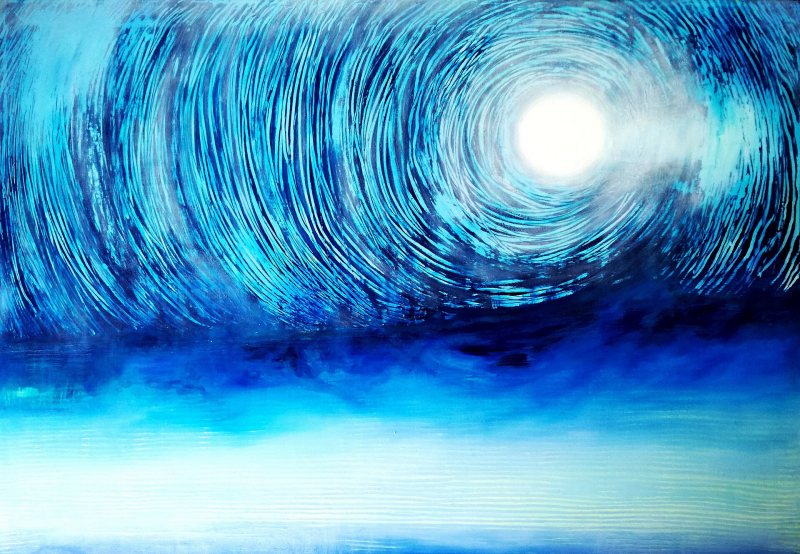
Giovanni Guida, Apotheosis grattage, 2014
Why is grattage still fascinating today?
Because grattage puts us in direct contact with the material.
It is a physical, instinctive technique that forces us to relinquish control and trust in the gesture.
In an age where everything is smooth and digital, grattage brings us back to the body, to touch, to the resistance of the surface, and reminds us that even by removing something, we can create beauty.
Grattage is much more than a technique: it is a way of looking at the world. It is the art of removing to reveal, of scratching to see beyond. It is a practice that speaks of depth, of hidden layers, of images that are just waiting for a gesture to come to light.
If you are intrigued, give it a try. Even just on a piece of cardboard and with a kitchen spatula.

Follow me on:
About me
In this blog, I don't explain the history of art — I tell the stories that art itself tells.