

Portrait of Madame Perrot by Tamara de Lempicka
One of the features I like most about Tamara de Lempicka‘s artistic production is the inclusion in her paintings of clothes and accessories that she herself probably wore.
Many of the dresses featured in her portraits can be identified as creations that appeared in the leading fashion magazines of the time.
Hers is a deliberate choice.
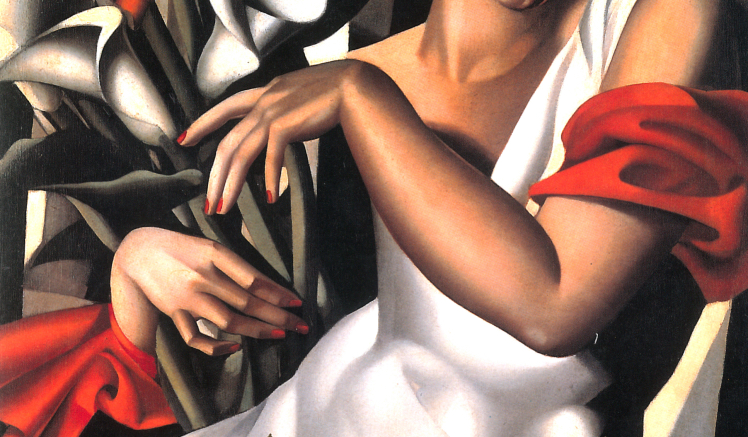
Portrait of Madame Perrot by Tamara de Lempicka
Tamara de Lempicka wanted to bring a composition inspired by ancient art into the modern era.
The bodies painted in her works are statuesque and the light is almost metallic. Dressing those bodies in modern clothes made the image represented more appealing and recognizable to collectors and enthusiasts.
The most famous of Tamara de Lempicka’s works featuring a dress in the fashion of the time is undoubtedly Girl in Green.
History and description of the portrait of Madame Perrot
The painting was exhibited for the first time in 1933 in three different exhibitions: at the Salon des Indèpendants, at the Salon des Femmes artistes moderne, and then at the Forward House exhibition held at Macy’s department store in New York.
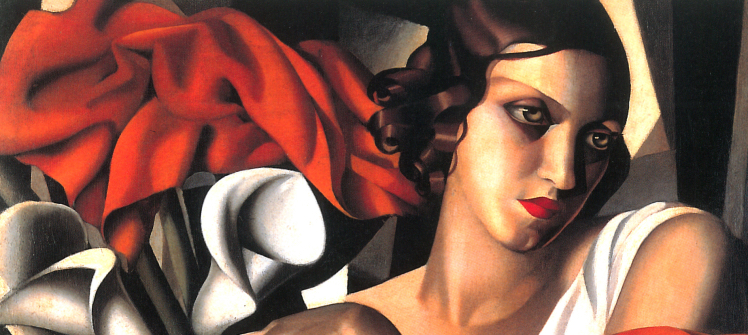
The woman portrayed is Ira Perrot, lover of Lempicka, who is depicted wearing a dress characterized by a series of cross-cuts at the hips, from which ruffles extend.
The dress was inspired by several designs from late 1931: one belonged to Maison Blanche Lebouvier, which had created an evening gown called “Conte blanc” that year, published in the fashion magazine l’Office de la couture et de la mode in September 1931; the other was designed by Agnès-Drecoll, published by the same monthly magazine in December of the same year.
An icon between art and private life
The Portrait of Madame Perrot is not a simple exercise in style, but a portrait of love, passion, and a hymn to modernity.
Ira Perrot was not only a model for Lempicka, but also one of her most intense romantic relationships. In this painting, Tamara manages to blend desire and distance, imposing on the figure a cold and sophisticated elegance, typical of her Art Deco style, but at the same time charged with emotional energy.
Ira’s body, sculpted in light, appears distant and magnetic, almost like a living sculpture. The fashion, the cut of the dress, the pose, and the gaze also recount a specific historical moment, in which the desire for female emancipation, luxury, and a new idea of sensuality, refined and intellectual, was gaining ground.
The link between art and fashion
As in many of the artist’s other works, fashion is a visual and narrative language.
Tamara de Lempicka does not simply paint what she sees, but constructs an image, like an art photographer or a fashion designer.
Every element is symbolic, from the elaborate dress to the theatrical posture to the coldness of the volumes.
Nothing is left to chance.
This relationship between fashion and painting is one of the most fascinating aspects of her work.
If you are intrigued by this character, I also recommend reading up on the 5 things to know about Tamara de Lempicka.
Where to find the Portrait of Madame Perrot
The Portrait of Madame Perrot is part of a private collection and is not on permanent display in a public museum. However, it has been included in several international exhibitions dedicated to the artist, helping to reinforce his fame and legend.
If you are lucky enough to find it on display, prepare to admire one of the most intense and modern female portraits of the 20th century, combining classicism and modernity, painting and design, art and life.

Follow me on:
About me
In this blog, I don't explain the history of art — I tell the stories that art itself tells.