

The five most beautiful works of art dedicated to Easter: between pain, light and rebirth
Easter is not just about chocolate eggs and spring outings. It is a holiday full of meaning, mystery and emotion.
And that is precisely why art has never stopped telling its story, over the centuries, with images that move, surprise and speak to the hearts of even those who are not believers.
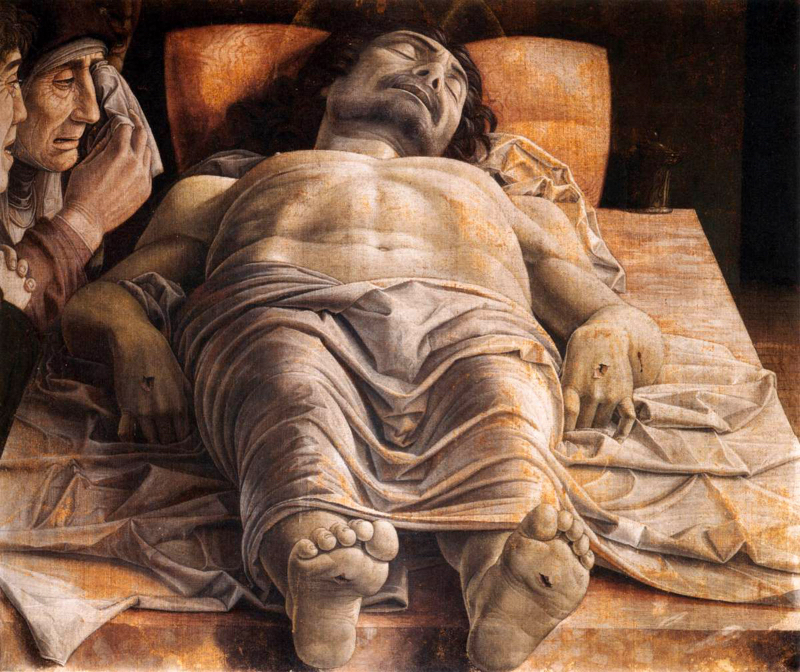
Cristo morto di Andrea Mantegna
The 5 most beautiful works of art dedicated to Easter: between pain, light and rebirth
I have chosen 5 works of art that speak of Easter — indeed, that embody it, in its most profound moments: from the Passion to the Resurrection, passing through human pain, wonder and reborn light.
A small journey into art and into ourselves.
1. Dead Christ by Andrea Mantegna (circa 1480)
Pinacoteca di Brera, Milan
A cold body, seen from below. Nailed feet, a livid face, closed eyes. At his sides, the Madonna and Saint John weep silently.
Mantegna’s Dead Christ is a punch in the stomach: the pain is real, physical, palpable. But it is also a technical masterpiece, with a bold perspective that seems to draw us into the scene.
Interesting fact: it seems that Mantegna used a real corpse as a model to make the work even more realistic. It has never been confirmed, but… look at it. It doesn’t look alive.
2. The Crucifixion by Matthias Grünewald (1512–1516)
Isenheim Altarpiece, Musée Unterlinden, Colmar
Forget the harmonious crucifixions of the Italian Renaissance. Here we are faced with a twisted, devastated Christ, covered in sores. Grünewald paints the pain of the flesh, which the patients in the hospital next door — for whom the work was intended — knew well.
It is one of the most intense images ever created: a cross that does not console, but shocks.
Curiosity: the altarpiece is composed of several movable panels, and when opened, it reveals an extraordinary scene of the Resurrection, which looks like an explosion of light and colour. A very strong contrast.
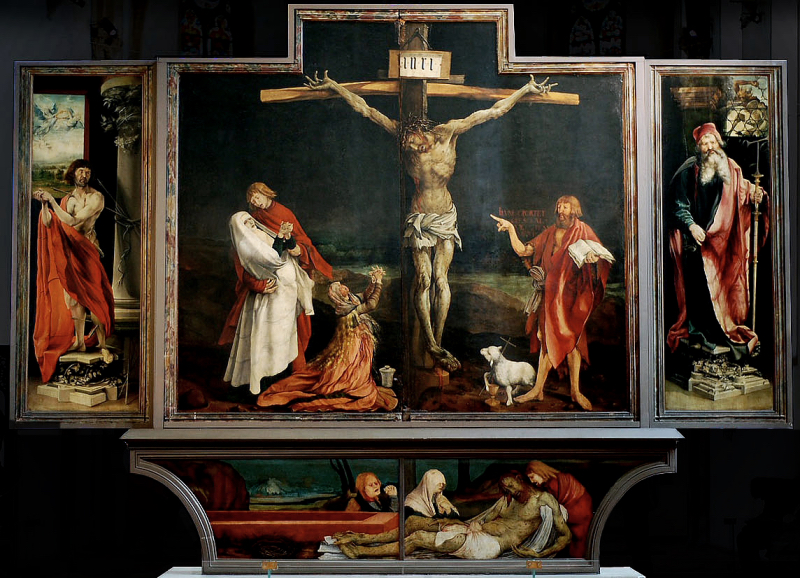
Crocifissione di Matthias Grünewald
3. Noli me tangere by Giotto (circa 1305)
Scrovegni Chapel, Padua
Jesus has risen and appears to Mary Magdalene, who kneels down and wants to touch him, but he stops her: “Do not hold me back”. In this scene, Giotto manages to convey the emotion of an encounter that marks the end of pain and the beginning of hope.
Christ’s delicate gesture, Magdalene’s sweetness, the light of dawn behind them… everything is simple, yet powerful.
Interesting fact: Giotto is not interested in theatrical effect, but in humanity. This is why his characters still seem so close to us today.
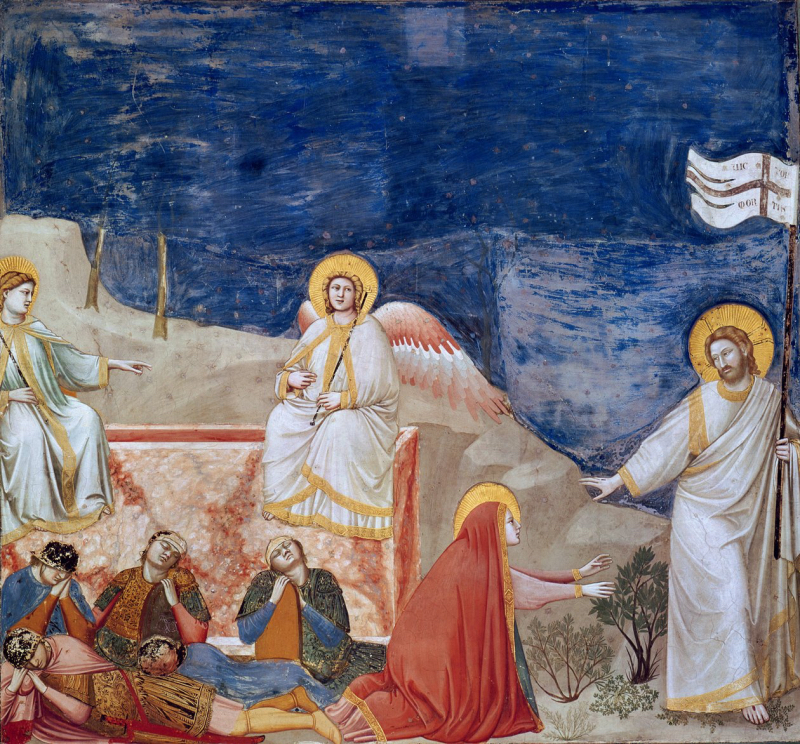
Noli me tangere di Giotto
4. Resurrection by Piero della Francesca (circa 1465)
Civic Museum, Sansepolcro
Perhaps the most iconic representation of Easter: the risen Christ emerging from the tomb, solemn, motionless, his gaze fixed on us. At his feet, the soldiers sleep, unaware of the miracle.
It is an image suspended between time and eternity. And Christ seems not only alive, but invincible.
Interesting fact: according to Aldous Huxley, this is the most beautiful painting in the world. And you know what? When Sansepolcro was bombed during the Second World War, a British officer stopped the attack because he knew that this masterpiece was kept here.
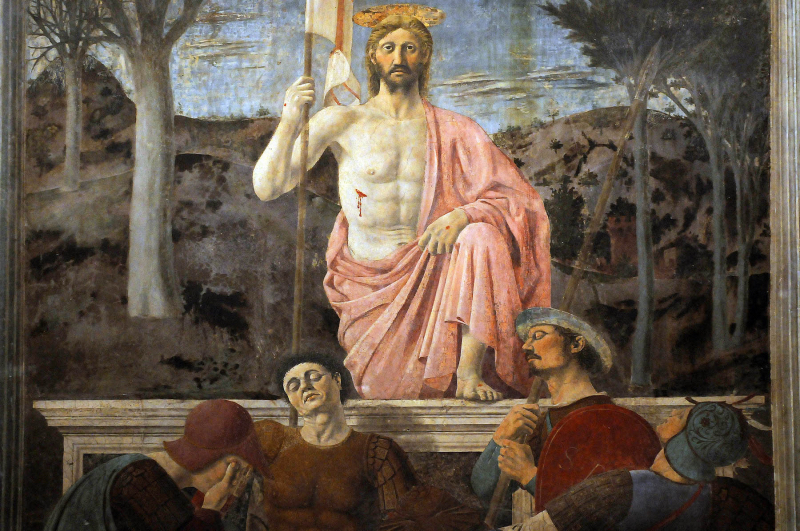
Resurrezione di Piero della Francesca
5. Deposition by Caravaggio (1602–1604)
Vatican Pinacoteca, Vatican City
Caravaggio does not paint a glorious Christ, but a lifeless body, laboriously supported by Nicodemus and Saint John. The Virgin weeps, exhausted. The weight of the body, the stone, the night.
It is an earthly scene, almost theatrical, yet full of spirituality. The real miracle is the light, which illuminates the faces and leads us towards hope.
Curiosity: Christ’s arm hanging towards the void is a detail that breaks the scene and “invites” the viewer to enter. As if to say: you too are part of this pain, but also of this resurrection.
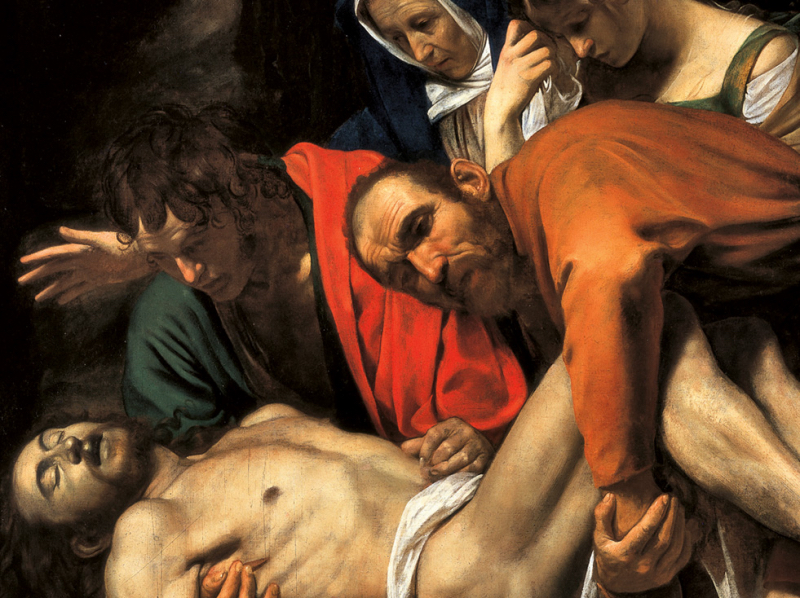
Deposizione di Caravaggio
Easter is also art
Easter is a story of pain and rebirth, and art has always told it in a way that only art can: with images that speak to the heart.
Whether you are a believer or not, it is difficult to remain indifferent when faced with these works. They are pages of the Gospel painted with a power that spans the centuries and reaches us today.
If you happen to be in one of these cities, go and see them in person, but even just looking at them online today is a way to pause and reflect.
Because Easter, after all, is always an opportunity to start afresh.

Follow me on:
About me
In this blog, I don't explain the history of art — I tell the stories that art itself tells.