

Art Nouveau Architecture in the Paris Metro: Hector Guimard’s Urban Masterpieces
Paris is a city that never ceases to amaze. Every time I return, I discover something new, even just walking in the rain with a baguette in my hand. Whether it’s for the art, the food or its unique lifestyle, I always find it difficult to leave.
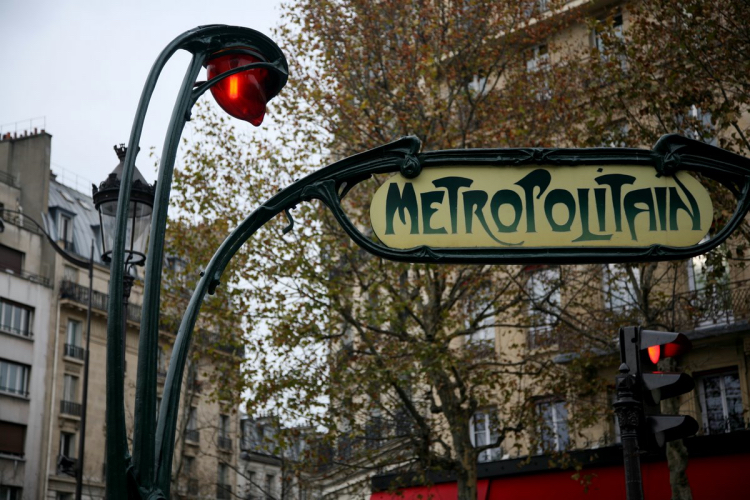
Among its lesser-known wonders is an urban detail that encapsulates all the magic of its early 20th-century spirit: the Art Nouveau metro entrances. These architectural gems set into the pavements transform the entrance to a station into a work of art.
Art Nouveau in the Paris Metro and a name to remember: Hector Guimard
The protagonist of this small visual revolution is the architect Hector Guimard.
His name may not mean much to you, but his creations are very famous. He gave the city a new image, made of curves, glass, wrought iron and floral details, bringing Art Nouveau from the world of art to the streets of everyday life.
Before devoting himself to the metro, Guimard had already made a name for himself with the famous Castel Béranger, a building that mixed styles, materials and asymmetrical geometries in a completely original way.
Art Nouveau, with its love of nature and decoration, finally found a contemporary language, capable of breaking with the rigid proportions of classical Parisian architecture.
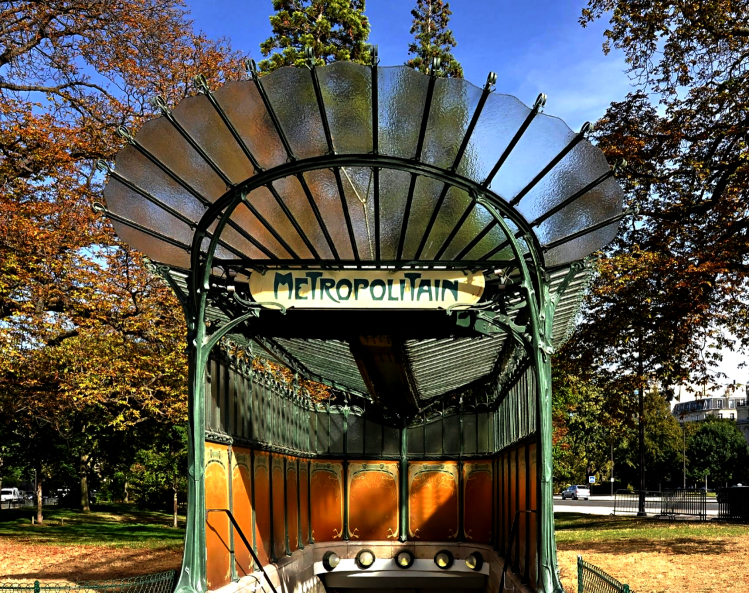
Hector Guimard (1867-1942) Métro Porte Dauphine (1900), Paris.
A metro that becomes art
In 1900, ahead of the Universal Exposition, Paris was ready to amaze the world.
The city was about to inaugurate its first metro line, a symbol of progress and modernity. To design the entrances to the new underground stations, Guimard was chosen, who was able to interpret this challenge with style, imagination and a totally innovative vision.
A total of 141 Art Nouveau-style entrances were built, although only 86 remain today. Guimard designed three main types:
The simplest model, consisting of cast iron balustrades decorated with plant motifs and two sinuous stems supporting the “Métropolitain” sign with its unmistakable typography. At the top, like flowers ready to bloom, orange street lamps that look like insect eyes.
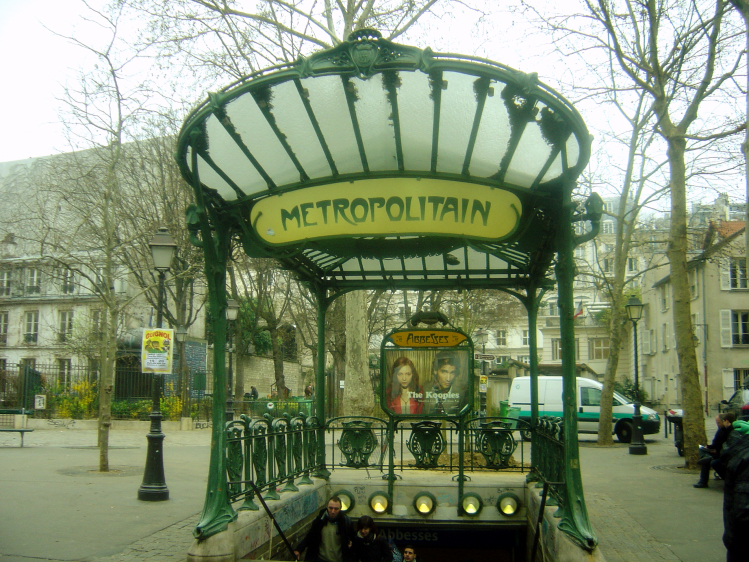
The more complex and decorative kiosks, equipped with shelters that protect the entrance.
Some resemble transparent pavilions, others have even more unusual and spectacular shapes.
The most iconic entrance: Porte Dauphine
One of the most fascinating entrances is that of the Porte Dauphine station.
Here, you can still see an original kiosk, preserved in its original configuration. The wrought iron structure, decorative side panels and glass roof create a shape that seems inspired by a giant moth, ready to take flight.
The curved lines, natural colours and softness of the form evoke a secret garden hidden in the heart of the city. It is Art Nouveau as an urban metaphor, capable of bringing the poetry of nature into a modern metropolis in the midst of transformation.
A legacy that lives on
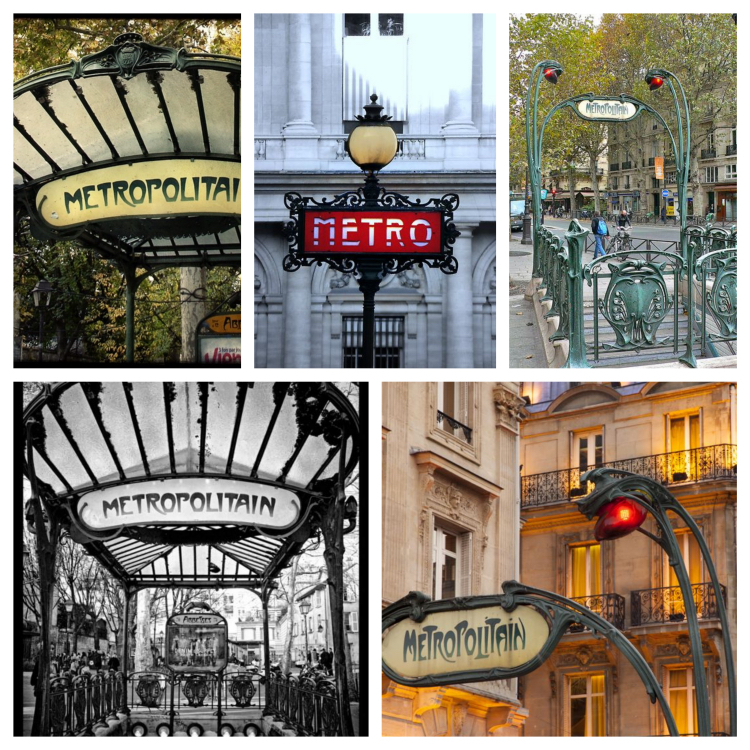
The metro entrances designed by Guimard are not just decorative objects; they convey a vision of the world in which art and functionality can go hand in hand. They represent a unique moment in the history of architecture: when even an underground entrance could become an act of love for beauty.
Today, they are among the most photographed and beloved elements of Paris, silent icons of an era that believed in the power of art in everyday life. Stopping in front of one of these entrances is like opening a window onto the past, a small journey through time among iron, glass and dreams.
In reality, Paris does not stop at these exceptional works, because it has plans to renovate other underground stations as part of the Grand Paris Express project. In this case, it is today’s art that is shaping the underground of tomorrow.
🖌️ This article was published in 2015 and was updated on 21 January 2026 with new facts and insights.

Follow me on:
About me
In this blog, I don't explain the history of art — I tell the stories that art itself tells.