

Boccaccio Boccaccino: the Renaissance master to be rediscovered
How often, when talking about the Renaissance, do the usual big names come to mind?
Leonardo, Raphael, Michelangelo… yet Italy is dotted with lesser-known but extraordinary artists who deserve to be mentioned. One of these is Boccaccio Boccaccino, described by Giorgio Vasari in his famous Lives as a “rare” and “excellent painter”.
A master who was able to intelligently interpret the lessons of the greatest artists and transform them into something unique.
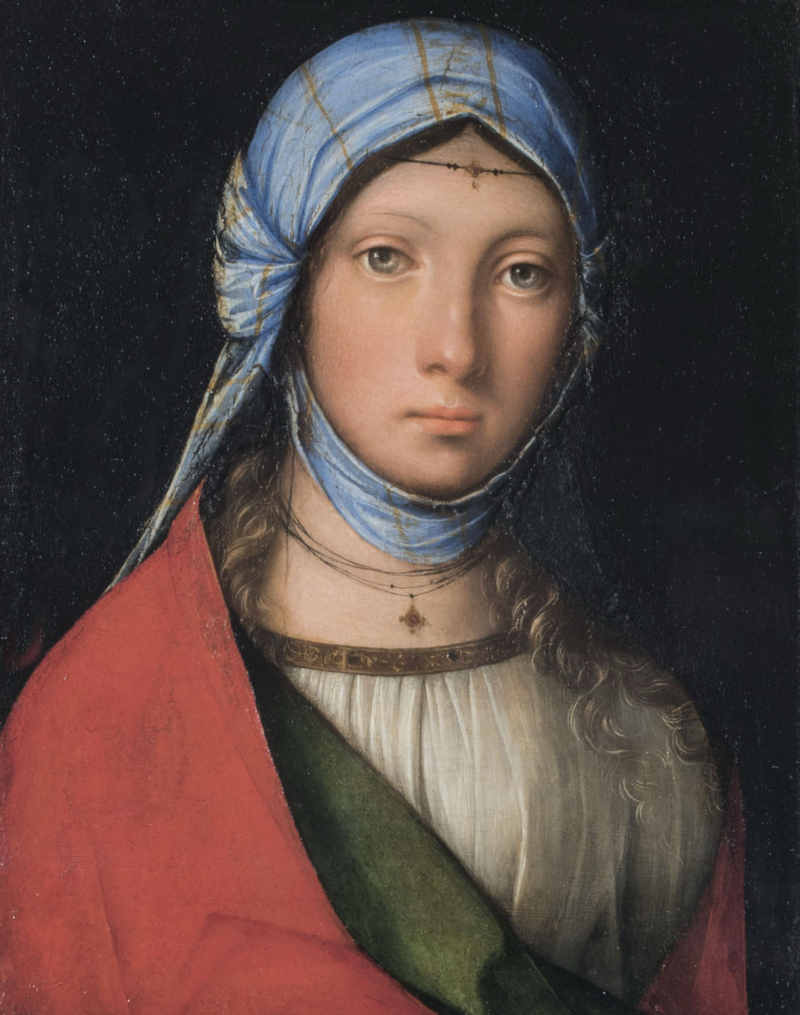
Boccaccio Boccaccino, Zingarella, 1504-1505 circa, Firenze, Gallerie degli Uffizi
Boccaccio Boccaccino: the life of a master to be rediscovered
Historical sources do not provide us with absolute certainty about Boccaccino’s origins: born in Ferrara (or perhaps in the surrounding area) between 1462 and 1466, he died in Cremona in 1525.
His life and career spanned a very wide geographical area: Ferrara, Genoa, Milan, Venice, Rome and finally Cremona, where he achieved some of his most significant accomplishments.
His career was not only that of a workshop painter, but of an artist in constant motion, capable of dialoguing with the most important painting schools in northern Italy.
His life was also marked by dramatic episodes, such as his daring move from Ferrara to Venice in 1500, but it was always guided by an extraordinary figurative sensitivity.
The works of Boccaccio Boccaccino
Boccaccino’s artistic heritage is now scattered across various Italian and foreign museums, but some works are fundamental and you should be familiar with them:
Adoration of the Shepherds (Capodimonte Museum, Naples): one of the first examples of his style, still linked to the Ferrara tradition but already open to Leonardo’s innovations.
Madonna and Child (Civic Museums of Padua): a work of intense sweetness that reveals his attention to detail and light.
Zingarella (Uffizi Gallery, Florence): perhaps his most iconic painting, in which the colour is velvety and the strokes refined.
Holy Family with Mary Magdalene and Ludovisi Annunciation (Diocesan Museum of Cremona): masterpieces that testify to the artist’s full maturity.
Fresco cycle in Cremona Cathedral: the Stories of the Virgin and the Childhood of Christ (1514-1519) are considered his most striking achievement, a veritable “open book” of the Po Valley Renaissance.
The style of Boccaccio Boccaccino
Boccaccino’s style bridges different cultures.
From the Emilian-Ferrara school, he inherited the solidity of the figures and the orderly composition; from Leonardo’s culture, he learned the sense of sfumato and naturalism; from Giorgione in Venice, he assimilated the soft tones and poetic atmosphere.
The result is a refined and personal language, where colour becomes the protagonist and the characters are immersed in a light that softens contours and volumes.
In his sacred conversations, portraits and fresco cycles, there is a narrative flavour that brings him closer to a great illustrator of the faith than to a celebratory painter.
Curiosities about Boccaccino
Boccaccino was a cosmopolitan artist: his work is attested in various cities, a sign of a very wide and prestigious network of patrons.
La Zingarella, for example, is a small painting preserved in the Uffizi Gallery, which over the years has become a sort of pop icon, often reproduced in manuals and studies on the Renaissance.
There is a crime story associated with Boccaccino dating back to 1500, when the artist left Ferrara for Venice following a dramatic event (the details of which are unclear from the sources), but he turned this escape into an opportunity to renew his painting style.
His portrait production is poorly documented and the only known portrait, in a private collection, is now considered a key piece for understanding his career.
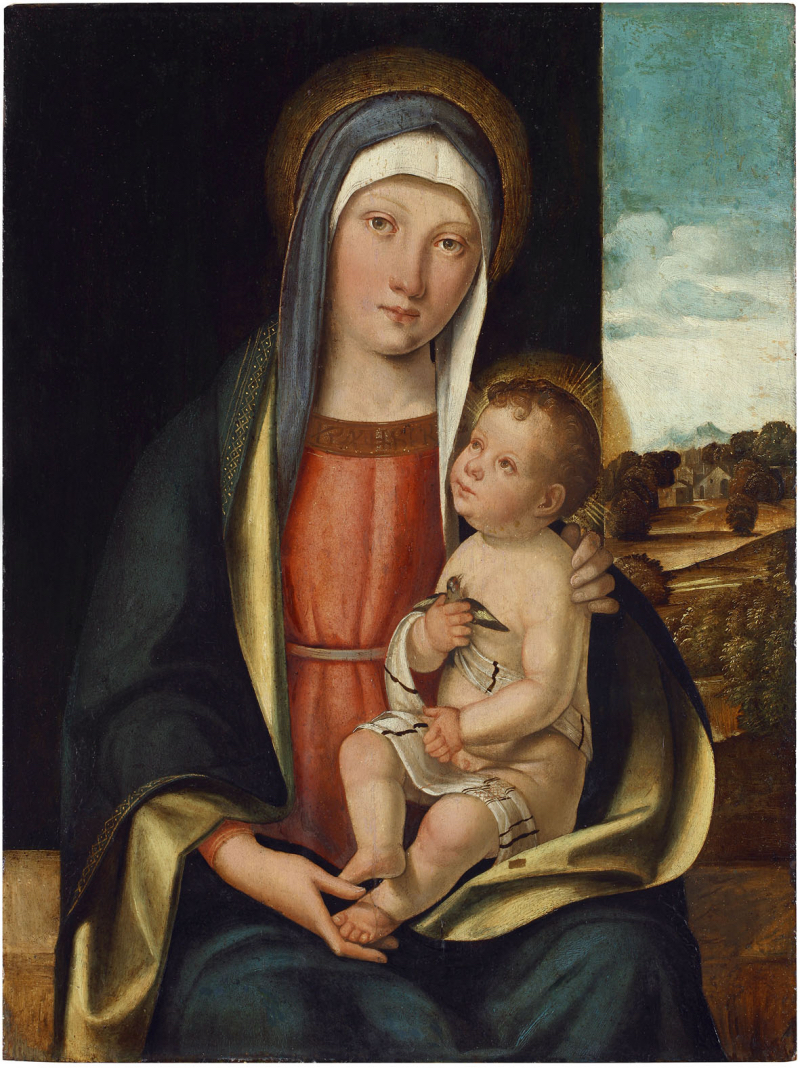
Boccaccio Boccaccino, Madonna col Bambino, 1499-1500 circa, Padova, Musei Civici, Museo d’Arte Medioevale e Moderna
Why rediscover Boccaccio Boccaccino
Boccaccio Boccaccino is not a name that is immediately familiar, but his works recount an extraordinary period of the early Renaissance, characterised by cross-fertilisation, travel and new ideas.
Looking at his paintings means entering a more intimate, “lateral” Renaissance, far from the spotlight but no less fascinating.
If you love discovering lesser-known but fundamental artists, Boccaccino is one to keep on your list. Next time you visit Cremona, Florence or Naples, stop in front of one of his works: you will understand why Vasari called him “rare” and “excellent”.

Follow me on:
About me
In this blog, I don't explain the history of art — I tell the stories that art itself tells.