

Diana the Huntress: the return of a masterpiece
In the heart of imperial Rome, in the second century AD, an unknown sculptor created a work that still enchants today with its grace, elegance of form and power of gesture. This is the extraordinary statue of Diana the Huntress, now finally on display in Rome, where time and myth meet in a story carved in stone.
The figure of Diana, Roman goddess of the hunt and twin sister of Apollo, is depicted here in motion, with her left leg forward and her faithful dog at her side. She is wearing a short chiton, perfect for running through the woods, with a cloak wrapped around her shoulders and tied at the waist. The gesture suggests a suspended moment: Diana is about to draw an arrow from her quiver, holding it with her left hand and preparing to shoot with her right.
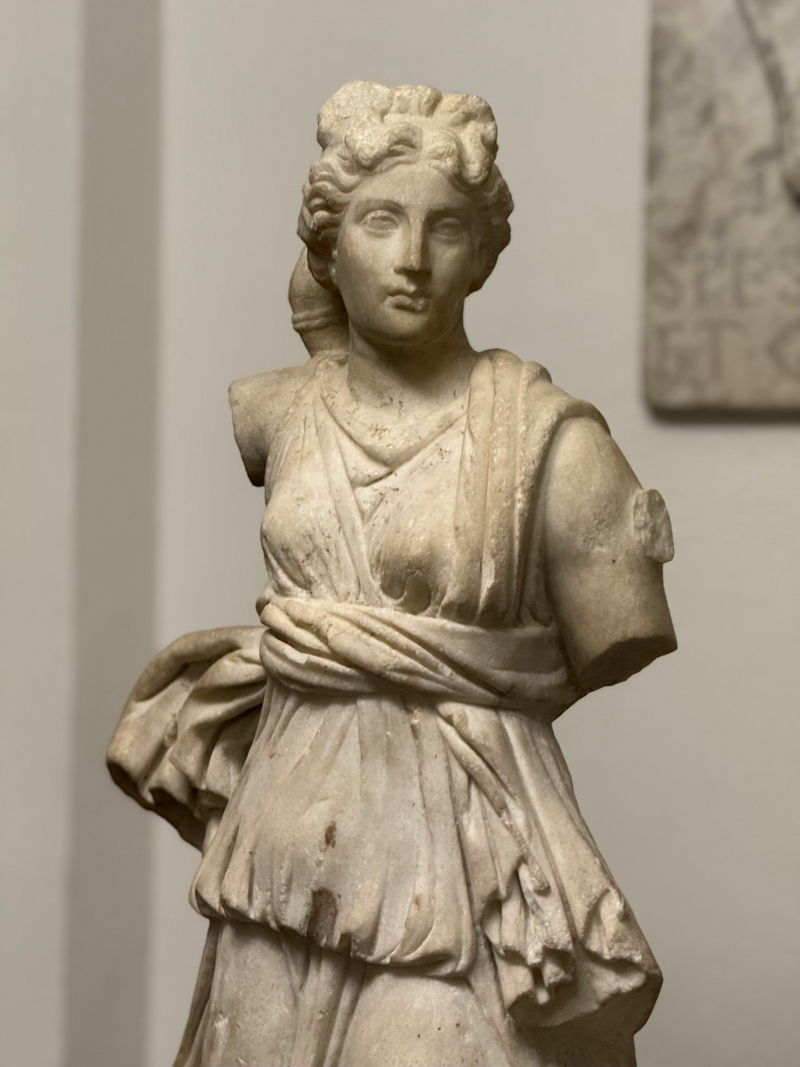
Diana the Huntress: a masterpiece of harmony and power
The balance of the composition is striking. The cloak, sculpted with extraordinary fluidity, seems to be moved by the wind, the folds discreetly revealing the curves of the body and helping to energise the scene. The hair, gathered in a low chignon with bow-shaped curls, is typical of 2nd-century Roman female portraiture. The face, turned to the left, combines delicacy and attention, as if the goddess were scanning a distant point in the forest.
She is not just a goddess of the hunt. Diana, in this version, is the ruler of nature, an ethereal but also vigilant presence, capable of striking anyone who profanes the harmony of the world. Her arrows are not just weapons, they are signs of divine justice.
Diana the Huntress is a Roman copy of a lost Greek original.
The statue belongs to an iconographic type known as “Diana Venatrix”, of which there are several examples. One of the most famous is in the Museum of Minturno, while another version known as “Rospigliosi” is preserved in the Roman palace of the same name. All derive, with slight variations, from a Greek original now lost, which survives only thanks to Roman copies and literary references.
This dialogue between Greece and Rome is one of the most fascinating aspects of the work. On the one hand, there is the search for ideal Hellenic beauty, and on the other, the entirely Roman desire to make that beauty concrete and alive, close to the observer. Diana is not an abstract image but a real presence, embodied in flesh and marble.
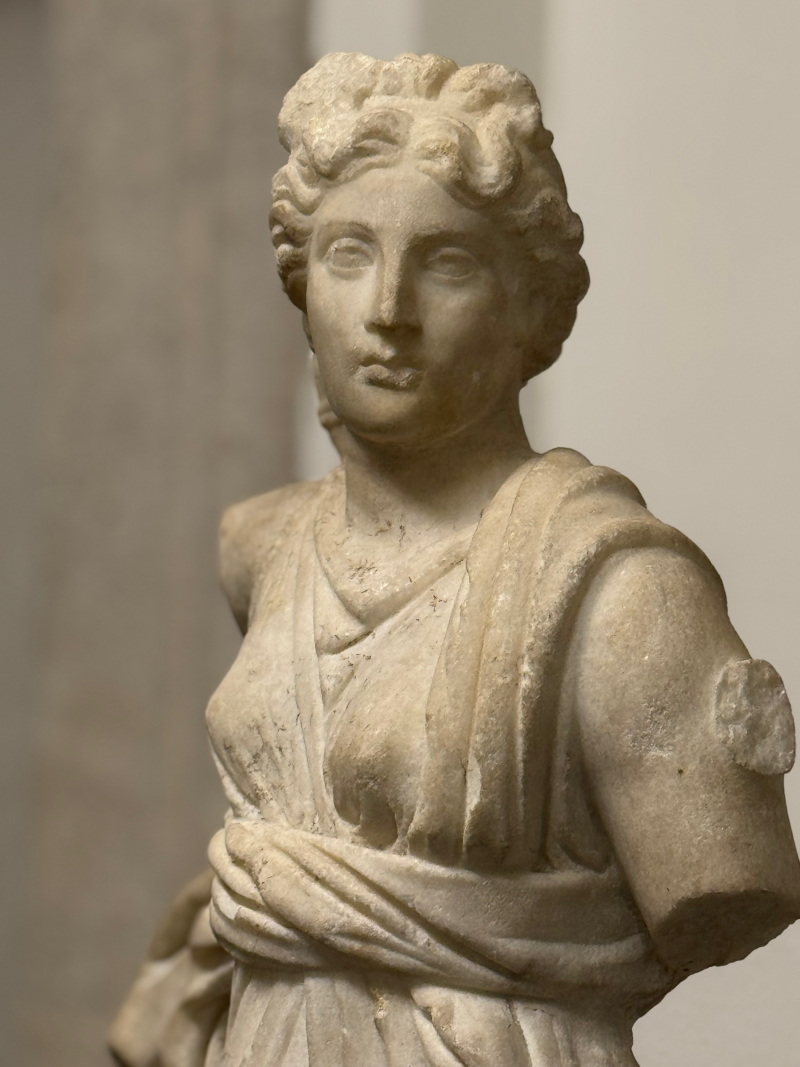
The return to Italy of an ancient art treasure
After a long journey that took it from the United States to Paris, passing through the hands of illustrious collectors such as Stephen and Peggy Fossett, the sculpture entered the collection of entrepreneur Carlo Mazzi. Its return to Italy was made possible thanks to the mediation of antiquarian Valerio Turchi, an expert in ancient archaeology.
Today, Diana the Huntress can be admired in Rome, at Palazzo delle Pietre, in Via delle Coppelle 23. A new piece that enriches Italy’s cultural heritage, a work that can be studied, admired and recounted by future generations. A long-awaited return, which is already part of our history.

Follow me on:
About me
In this blog, I don't explain the history of art — I tell the stories that art itself tells.