Drawing as an art form: tracing the invisible, listening to silence
Drawing is the first gesture. It is what a child does as soon as they pick up a pencil, what an artist does to give shape to an idea, what each of us has done at least once without even thinking about it. However, drawing is not just a tool for designing or “sketching”; it is an autonomous art form, deeply intimate, moving between instinct and thought.
In this post, I take you with me on a journey through the textures of drawing, both ancient and contemporary, where the mark becomes language, silence, writing and memory.
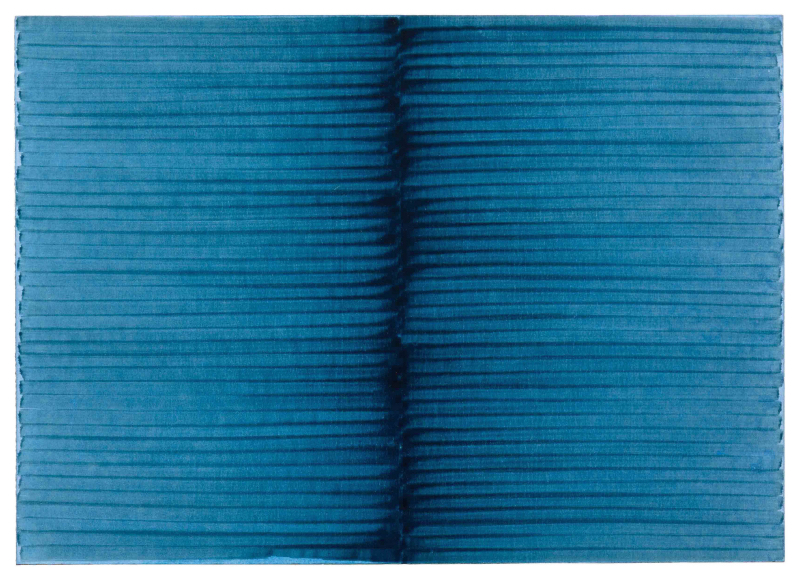
Irma Blank, Radical Writings (Exercitium ABC-1), 1988. Olio e acquerello su cartoncino, 24.8 x 34.8 cm. Courtesy Collezione Ramo, Milano
Drawing is the language of the body and soul
Drawing is like writing a letter without words. It is putting an internal movement, a rhythm, an emotion on paper.
In art history, drawing has often been considered the “first step” towards something more finished: a painting, a sculpture, a piece of architecture. However, in recent decades, artists have claimed the full autonomy of drawing as a total artistic gesture.
Irma Blank’s drawing as a form of meditation
Irma Blank, a German artist who moved to Italy, has dedicated her entire practice to writing without language, to drawing as a trace of breath and time.
Her works resemble pages filled with signs, silences and lines that are not meant to be read but felt. Blank has transformed drawing into a form of writing of the soul, where the sign is a mantra, a form of visual meditation. Her work is also ideally linked to the theme of automatic writing in Surrealism, which freed the gesture from rational control.
Drawing to listen: the slow art of Katarzyna Wiesiolek
If Irma Blank writes without words, Katarzyna Wiesiolek draws to listen to silence.
A Polish artist working between Germany and Italy, Wiesiolek has taken drawing into an intimate and contemplative realm. Her works are delicate and profound, traced with a care that resembles prayer.
In her works, the mark is repetition, but never monotony: it is attention.
For her, drawing becomes a way to slow down, to inhabit time, to reconnect with the essence of oneself and with the fragility of the world.
Wiesiolek teaches us that drawing is not used to “represent” something, but to enter into a relationship with that which has no form: memory, absence, melancholy.
When a drawing is already a masterpiece
Even the great masters of the past left us drawings that were not simply preparatory studies, but complete works of art.
Leonardo da Vinci, Michelangelo, Raphael: their sheets of paper preserve dazzling insights, perfect anatomies, visual thoughts that are as valuable as their most famous paintings.
For them, drawing was a form of thought and a spiritual exercise.
This same power is found in the works on paper by Luigi Pericle, a 20th-century artist and thinker who has only recently been rediscovered, who used drawing as a means of exploring the invisible and the inner self.
His works, dense with symbols and silences, remind us that drawing is not just about representation, but also about meditation, searching and understanding.
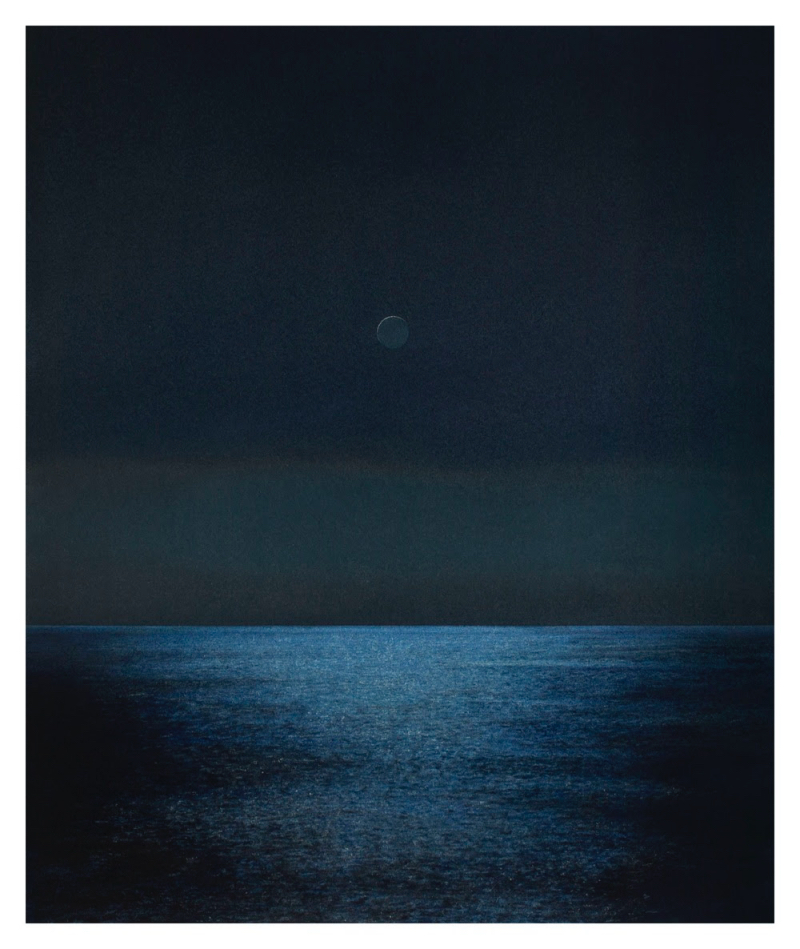
Katazyna Wiesiolek, Radical lightings, 2025. Pigment on paper, 84 x 70 cm
Why drawing concerns us all
Today, drawing has made a powerful comeback at the centre of the artistic debate.
It is no longer (just) the tool used by masters to design masterpieces, but an autonomous contemporary language, capable of expressing the inexpressible. It is fragile, accessible, intimate.
Drawing requires little: a surface and a gesture, but in that little, there is a world.
Rediscovering drawing as an art form also means reclaiming a primary, often forgotten gesture. It invites us to slow down, listen, observe and reminds us that we don’t need to shout to communicate something profound: a sign is enough, if it is sincere.
Between Irma Blank’s visual writings and Katarzyna Wiesiolek’s meditative drawings, drawing reveals itself for what it is: a poetic act that transcends time.
Perhaps, in a world where we are overwhelmed by images and words, returning to the simple gesture of drawing is a way to rediscover ourselves.

Follow me on:
About me
In this blog, I don't explain the history of art — I tell the stories that art itself tells.