

Gibellina 2026: art as the foundation of community
There is a town in Sicily that has chosen to be reborn through art and that in 2026 will become the beating heart of contemporary Italian creativity. Gibellina, a symbol of reconstruction after the 1968 earthquake, is officially the first Italian Capital of Contemporary Art, with an ambitious project that bears an evocative title: Bring me the future.
This is not just an art exhibition, but a year-long journey that transforms Gibellina into a living laboratory of cultural, social and community regeneration. Andrea Cusumano is the artistic director, supported by a multidisciplinary team and high-profile scientific committees, ready to intertwine art, critical thinking and collective participation.
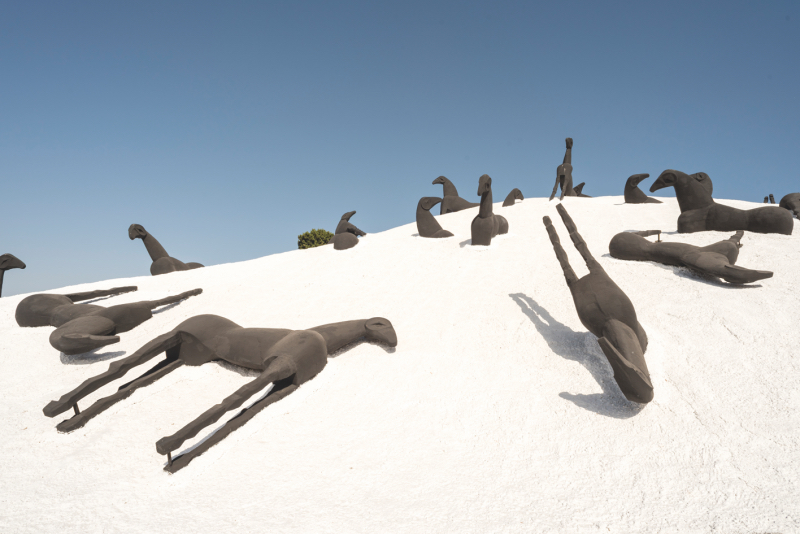
Gibellina 2026, Paladino Montagna di Sale, Mimmo Paladino
Gibellina 2026: art as a vision of the future
The programme officially kicked off on 15 January 2026, a date that was anything but random.
That day coincides with the anniversary of the earthquake that destroyed Gibellina and the Belìce Valley. The inauguration thus becomes a deeply symbolic and political act: art is not ornamentation, but a tool for reconstruction, memory and shared vision.
“Bring me the future” aims to demonstrate how culture is a collective responsibility. In an era that seeks fixed points, Gibellina proposes itself as a paradigm: contemporary art can be a tool for cohesion, dialogue and care for the territory. A way to activate relationships, produce knowledge and generate meaning.
In reality, Gibellina was already a virtuous example of rebirth under the sign of art, given that a few years ago the MAC in Gibellina, the Museum of Contemporary Art with the largest collection in Southern Italy, was reborn.
A year of events, exhibitions and relationships
The calendar is rich and varied.
The inaugural exhibitions immediately reveal the profound identity of this project. Dal mare. Dialoghi con la città frontale (From the sea. Dialogues with the frontal city), with video installations by MASBEDO and Adrian Paci,opens the curtain at the Pietro Consagra Theatre, an iconic location in the new Gibellina. Next, Colloqui, curated by Cristina Costanzo and Enzo Fiammetta, celebrates five female figures central to the art world: Carla Accardi, Letizia Battaglia, Renata Boero, Isabella Ducrot and Nanda Vigo. An exhibition that shows how women’s work is an integral part of the city’s civic project.
Austerlitz, the installation by Daniele Franzella in the church designed by Nanda Vigo, is part of the Generazione Sicilia collective exhibition at the MAC – Museo d’Arte Contemporanea Ludovico Corrao, which brings together the artistic energies of the island in a collective narrative.
Gibellina as a cultural paradigm
Being the first Italian Capital of Contemporary Art is not only a recognition but also a commitment. Gibellina becomes an epicentre of Mediterranean culture, a space for experimentation and reflection that focuses on art as a tool for cultural democracy and the construction of public space.
The project was born as a joint initiative, in collaboration with the municipalities of the Belìce Valley and with broad national and international participation. Culture here is understood as an inalienable right, based on proximity, plurality of languages and respect for the territory.
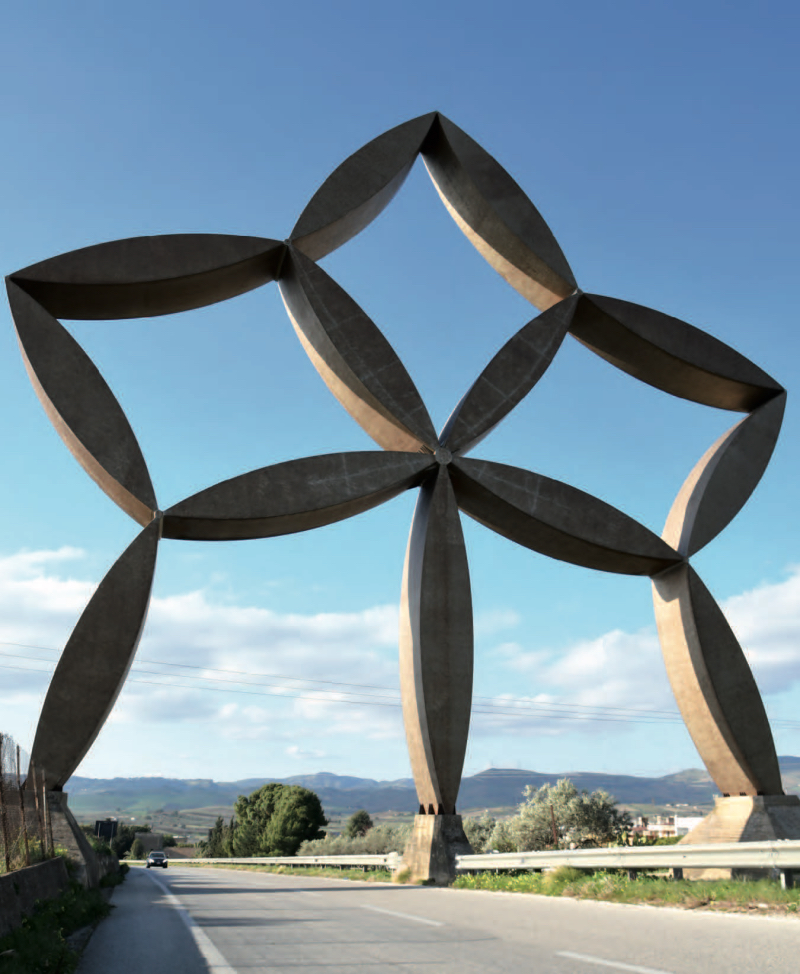
Gibellina 2026, Consagra Stella
Not just present, but the art of presence
The vision that guides Gibellina 2026 is powerful and necessary: contemporary art is conceived as the art of presence, not just as a representation of the present. An art capable of generating genuine relationships, shared responsibility and collective awareness.
In this sense, Bring me the future is not a slogan, but a promise. A promise of change, commitment and care. A call to each of us, so that art is not a place to visit occasionally, but a space to inhabit together.
📍 For full details and updates: www.gibellina2026.it

Follow me on:
About me
In this blog, I don't explain the history of art — I tell the stories that art itself tells.