

Giovanni Fattori: who was the master of the Macchiaioli who depicted Italy during the Risorgimento?
Do you know who was the painter who revolutionised 19th-century Italian art without ever abandoning his personal artistic quest?
If you love plein air painting, landscapes that taste of wind and earth, scenes from real life and history told through sincere brushstrokes, then you must discover the works of Giovanni Fattori, the Tuscan artist who gave face and body to the Macchiaioli movement.
Born in Livorno in 1825 and active until 1908, Fattori was not only an innovator of the pictorial language, but also a profound witness of his time, as he depicted rural Italy and Italy at war, the pain and dignity of the people, the disappointments of the Risorgimento and the timeless beauty of the Maremma.
In this post, I will accompany you on a journey of discovery of the man and the artist, to understand why Giovanni Fattori is still one of the most authentic and powerful protagonists in the history of Italian art.
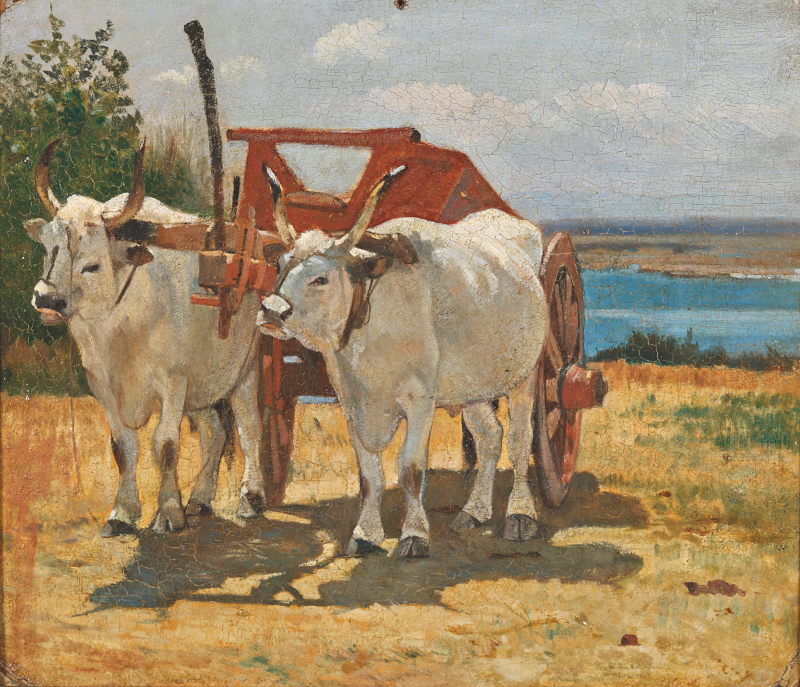
Giovanni Fattori, Bovi al carro, 1868-1870, olio su cartone, 29 × 34 cm Carpi. Collezione Palazzo Foresti
Giovanni Fattori: the poet of the “macchia”
Fattori is considered the leader of the Macchiaioli, a group of Italian painters who revolutionised painting in the second half of the 19th century by abandoning academicism in favour of realism.
For Fattori, the “macchia” was not a stylistic quirk, but a method of restoring the truth of the world, made up of light and shadow, bodies, landscapes and events.
His paintings contain everything: the rural life he loved so deeply, the soldiers of the wars of independence whom he observed with participation and detachment, the stern faces and everyday gestures of the people.
There is no rhetoric, no idealisation, only the truth of a changing Italy, seen through the profound gaze of someone who is not dazzled by fashion.
Fattori, a complete artist: portraits, landscapes and military scenes
Fattori mastered all genres of painting, and his portraits are striking for their psychological intensity and sobriety, while his Tuscan landscapes, painted in the open air, convey the harsh, sun-drenched beauty of the Maremma. He loved to depict peasant life, which he saw as an ethical and spiritual refuge from the urban modernity he felt alien to.
Fattori left an important legacy, especially in his depiction of the military world, and in fact his war scenes, often bare and silent, recount the life of soldiers beyond the epic. There are no heroes, but men and a profound reflection on the failure of the ideals of the Risorgimento, without renouncing a deep humanity.
Fattori’s graphic soul: etchings
Alongside painting, Fattori also devoted himself passionately to graphic art, and his etchings, often little known, are true masterpieces of expressive synthesis that bear witness to the artist’s stylistic evolution and his impact on 20th-century graphic art.
Fattori not only interpreted his own time, but also anticipated future trends, profoundly influencing Italian art in the following century.
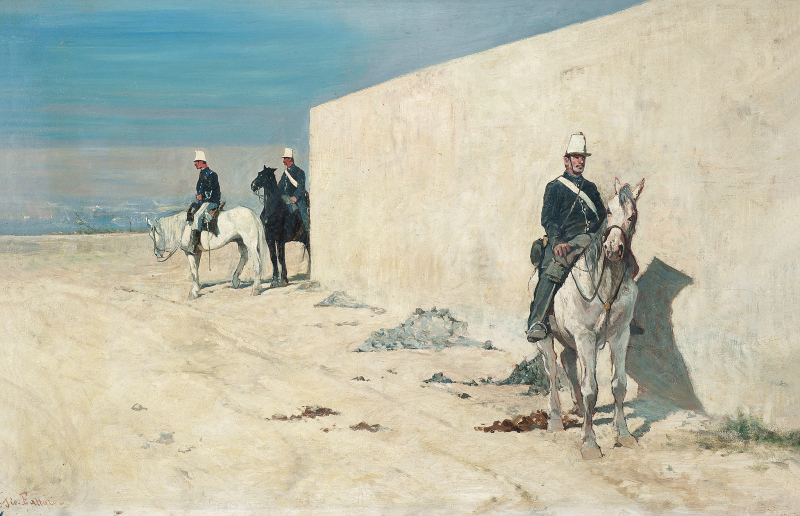
Giovanni Fattori, In vedetta. Il muro bianco, circa 1874, olio su tela, 34,5 × 54,5 cm. Trissino, Fondazione Progetto Marzotto © Fondazione Progetto Marzotto, Trissino
Fattori’s legacy: between art, literature and cinema
The mark left by Giovanni Fattori did not fade with his passing. Critics such as Ugo Ojetti and Emilio Cecchi, artists such as Giorgio de Chirico and directors such as Luchino Visconti drew inspiration from his atmospheres, his lighting and his visual narratives.
Just watch films such as “Senso” (1954) or “Il Gattopardo” (1963) to recognise the flavour of Fattori’s works, that mixture of beauty, melancholy and realism that defines an era. Fattori did not just paint Italy, he recounted it and understood it before others did.
If you want to discover other Italian artists who have marked the history of art, I recommend reading our in-depth article on Giovanni Boldini, the painter of elegance and high society.
Did you already know Giovanni Fattori? Which of his works impressed you the most? Let me know in the comments!

Follow me on:
About me
In this blog, I don't explain the history of art — I tell the stories that art itself tells.