

Guido Reni: painter of heavenly graces (and human dramas)
Some people are born under a lucky star, and then there is Guido Reni, who painted saints, Madonnas, and even pagans under the stars. A beloved painter in his time (and in ours), the undisputed master of Italian art in the 17th century, Reni is one of those artists who manages to please everyone: lovers of sacred art, mythology enthusiasts, fans of the Baroque, and even those who need an image to send to their devout aunt on WhatsApp.
But who was Guido Reni really? Why do we like him so much? And above all: how did he manage to make even the death of Actaeon or the martyrdom of Saint Catherine so… elegant?
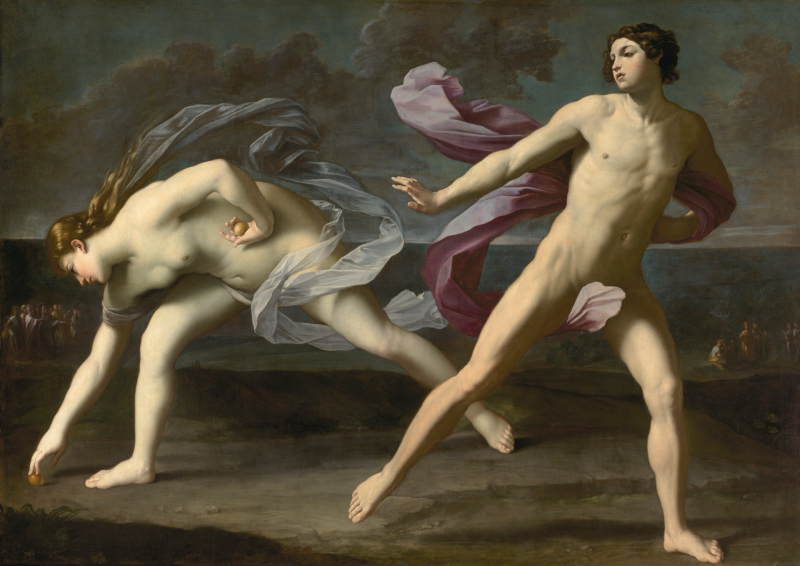
Guido Reni, Atalante e Ippomene
Guido Reni: the painter of grace and drama
Guido Reni was born in Bologna in 1575 and immediately showed more talent with a paintbrush than in making friends. At the age of 10, he was already a pupil of the Flemish painter Denis Calvaert and later attended the Accademia dei Carracci, breathing new and revolutionary air for the art of the time.
His career took off quickly. He worked for the nobility and the popes, but beware, Reni was not just a painter who executed commissioned works, he was a tormented artist, capable of emotional highs and lows, mystical ecstasy, and chronic depression. He was a restless soul who sought perfection in every brushstroke and often took refuge in an almost monastic life. No wine, no women, only art and prayer. Or so the chronicles tell us…
The most famous works (the ones you absolutely must know)
You have surely already seen something of his, even if you didn’t know it. Here is a mini list of the works you need to know:
Archangel Michael Defeating Satan (Church of Santa Maria della Concezione, Rome): as beautiful as a Greek god, but armed against evil. If Satan lost, it was also because he was too distracted by the beauty of his opponent.
Atalanta and Hippomenes (Capodimonte Museum, Naples): sensuality, dynamism, and a horse that almost leaps out of the canvas. When myth meets Baroque in grand style.
The Martyrdom of Saint Catherine (Capitoline Museums, Rome): this is how to transform tragedy into pictorial poetry.
The Aurora (Palazzo Pallavicini Rospigliosi, Rome): a dreamlike fresco, literally. The goddess Aurora drives the chariot of the Sun amid fluttering cherubs and golden colors. One of the most iconic images in Italian painting.
Saint Sebastian (several versions): his Sebastian is always young, ethereal, with an almost… elegant pain. One of the subjects most loved by collectors.
Guido Reni’s style: a devout Caravaggio who aspires to the absolute
Reni is not Caravaggio, but he knows well what that rebellious boy of painting did. He also uses chiaroscuro, but without excess. The light in his paintings is that of divine grace, not that of disreputable taverns that becomes mystical.
His style is one of harmony, grace, and proportion. The figures seem suspended, the bodies light, the faces enraptured by an inner ecstasy. Reni paints the divine with an elegance that borders on perfection, and even when he depicts pain, he does so with a composure all his own.
Those who love Reni do so for his classicism filtered through Baroque pathos. It is like listening to Bach with Morricone’s orchestra: sacred and spectacular at the same time.
Curiosities (which make him even more interesting)
Guido Reni was obsessed with ideal beauty.
It seems that he spent hours retouching the faces of his characters until they were perfect!
He did not enjoy company. He preferred the solitude of his studio and meditation to social life. A master of the 17th century… but very, very introverted.
He was superstitious and believed in prophecies. A baroque mind, even outside the canvas.
He was very fast, and some say he painted with surprising speed, almost as if grace flowed directly through his veins.
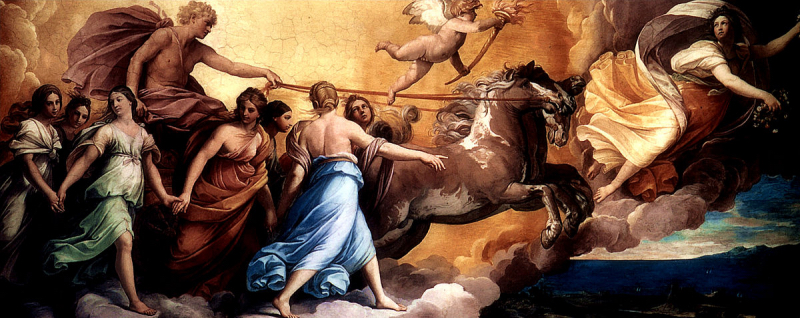
Guido Reni, L’Aurora
Guido Reni is one of those artists who, even after centuries, continues to invite us to look up and aspire to the absolute, but also reminds us that beauty is a profoundly human experience. In practice, if today we still want to lose ourselves in a painted gaze, let ourselves be moved by a light that touches the skin of an angel or shudder at the fate of a martyr, perhaps it is also (or above all) thanks to him.
Have you ever seen a work by Guido Reni in person? If so, tell me about it in the comments and describe how you felt.
🖌️ This article was published in 2013 and was updated on September 9, 2025, with new curiosities and insights.

Follow me on:
About me
In this blog, I don't explain the history of art — I tell the stories that art itself tells.