
Impossible encounters: in front of Paul Gauguin
After meeting Vincent van Gogh, his restlessness and his desperate need to remain in the world through colour, there was one name that kept coming back.
Not like a peaceful echo, but like an unresolved fracture.
Our Impossible Encounters continue in this way, following the tense threads of art history, those that unite and at the same time separate.
After Van Gogh, the encounter could only be with Paul Gauguin, the man who shared dreams, clashes and a legendary cohabitation with Vincent.
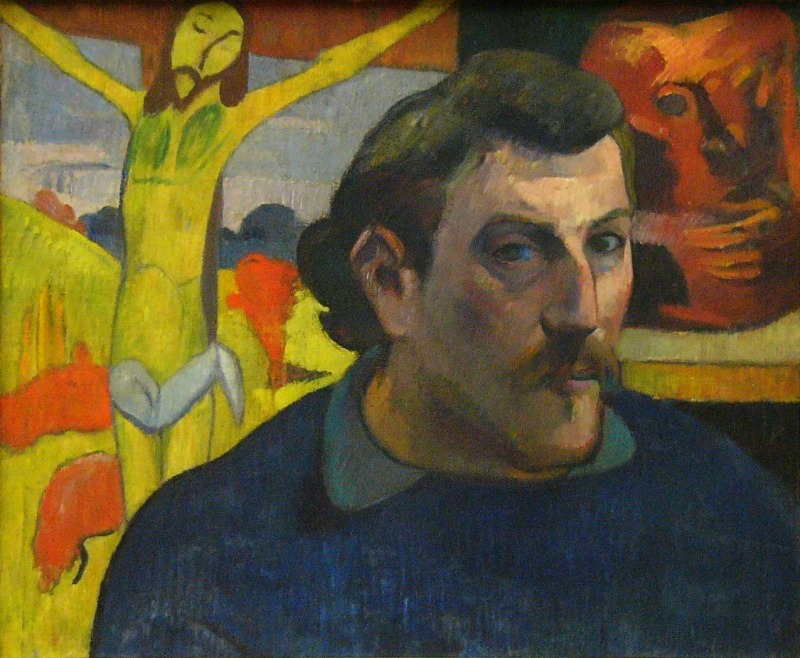
Gauguin’s impossible answers
If Van Gogh sought salvation in colour, Gauguin sought escape.
Sitting in front of him means entering unstable territory, where art becomes a radical choice, a rejection of Europe and a desire for an absolute elsewhere.
I am standing in front of Paul Gauguin.
His gaze is steady, his posture confident, as if he had already decided not to ask anyone’s permission.
Paul, after meeting Van Gogh, one question is inevitable. What did Vincent really mean to you?
Vincent was an uncontrollable force. I admired his total dedication to painting, his ability to sacrifice everything in order to remain true to what he felt. At the same time, that same intensity suffocated me. I sought distance, he sought closeness.
We experienced art as an absolute necessity, but in opposite ways. Our cohabitation was an extreme experiment, destined to fail, because neither of us was willing to compromise on our idea of freedom.
At a certain point, you decided to leave Europe and go to Tahiti. Was it an escape or an artistic choice?
It was both. Europe seemed tired to me, turned in on itself, suffocated by rules and the market. I felt that art could no longer be born there.
I was looking for a place where life was still intertwined with myth, where colour was not imitation but primary language. Tahiti was not a paradise, as many wanted to believe, but a mental space where I could start from scratch, even at the cost of losing myself.
Your works seem suspended between dream, myth and reality. What did you really want to convey with your painting?
I didn’t want to tell, I wanted to evoke. Painting should not explain, it should suggest. I looked for images that would function as symbols, capable of speaking to the viewer without the need for translation. Flat colour, simplified forms and the absence of depth were conscious choices. I wanted to free painting from optical illusion and bring it back to a mental and spiritual dimension. Art should not reassure, it should raise questions.
Many accuse you of having constructed an exotic myth, looking at distant cultures with a Western gaze. How would you respond today?
Every gaze is inevitably partial. I have never claimed to be neutral. I sought elsewhere because I felt that only outside Europe could I question myself. I idealised, of course, but idealisation is part of artistic creation. The mistake would be to think that art should be documentation. I was looking for an inner truth, not an ethnographic account.
You gave up stability, family and security for art. Was it worth it?
Art doesn’t work in terms of compensation. There is no final balance sheet. I chose to live according to a vision and I paid the price. I would make the same choices again because I wouldn’t have known how to live differently. An artist is not someone who finds balance, but someone who accepts imbalance as a necessary condition. Tranquillity does not generate images that remain.
Last question. If you could talk to Van Gogh again today, what would you say to him?
I would tell him that he was right not to compromise. I would tell him that time has given him what life denied him. I would tell him that some wounds do not heal, but become light for others.
Perhaps we would never have been friends, but we were inevitable for each other.
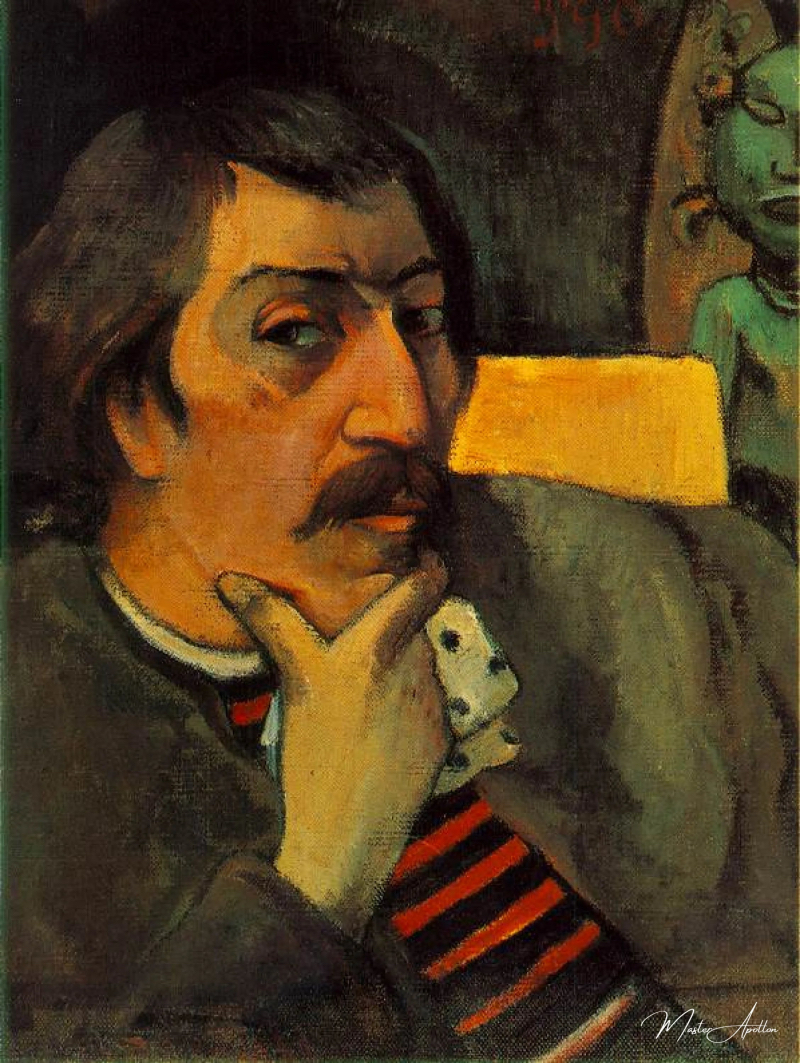
This encounter with Paul Gauguin ends here, between the desire to escape and the need for truth.
His words remain open, like his images.
If you were sitting in front of Gauguin, what question would you ask him?
Write it in the comments or send it to me: it could become the next entry in Impossible Encounters.

Follow me on:
About me
In this blog, I don't explain the history of art — I tell the stories that art itself tells.