

Kandinsky and Italy: a journey through colours and revolutions
If I told you that one of the most important exhibitions of the year is in Gallarate, would you believe me?
Trust me: Kandinsky and Italy at the MA*GA Museum is an extraordinary journey into the beating heart of abstract art. And yes, it is definitely worth a visit.
From 30 November 2025 to 12 April 2026, you can discover 130 works that recount not only the evolution of Wassily Kandinsky, but also the revolutionary impact he had on the entire European and Italian art scene. An unmissable opportunity for those who love art that breaks the rules, explores new languages and leaves room for the purest imagination.
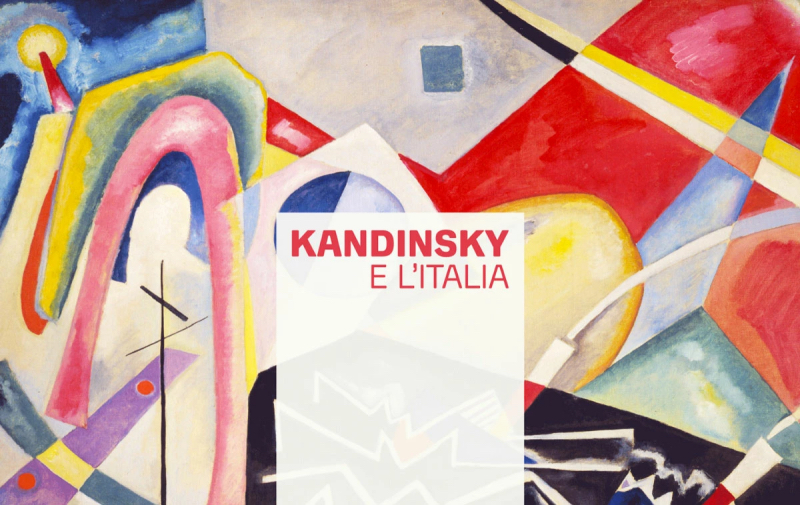
Kandinsky and Italy: an ambitious project for a visionary master
The exhibition is the result of an important collaboration between the MAGA Museum and the Fondazione Musei Civici di Venezia. It is curated by two women of art: Elisabetta Barisoni, art historian and head of Ca’ Pesaro, and Emma Zanella, director of MAGA. Together, they have created a journey that combines expertise, collections and visions, bringing masterpieces from museums and private collections of the highest calibre to the exhibition.
Kandinsky and Italy is part of the Milan Cortina 2026 Cultural Olympics. This means that you are witnessing an event that is not just an exhibition, but a real piece of the great cultural map that Italy is building in view of the Olympic Games. In short, art and sport are joining forces, and you are invited to participate.
Kandinsky and his “travelling companions”
The exhibition opens with a section exploring the international context between the 1920s and 1930s, when Kandinsky — a professor at the Bauhaus — revolutionised the language of painting and engaged in dialogue with masters such as Paul Klee, Jean Arp, Joan Miró, Alexander Calder and Antoni Tàpies.
These names alone are worth the price of admission, and here they are brought together in a choral narrative.
Immediately afterwards, the focus shifts to the relationship with Italy: a bond that was not always easy, but definitely fruitful. Kandinsky’s solo exhibition at the Galleria del Milione in Milan in 1934, for example, sparked a lively debate among Italian artists who wanted to escape the canons of figurative art. This marked the beginning of the great season of Italian abstract art, with protagonists such as Lucio Fontana, Fausto Melotti, Osvaldo Licini, Manlio Rho and many others.
The third part of the exhibition is perhaps the most surprising. It recounts how, after the Second World War, Kandinsky’s thinking continued to inspire entire generations. Thanks to seminal exhibitions such as Arte astratta e concreta (Abstract and Concrete Art, 1947) and avant-garde groups such as Forma, MAC and Origine, the Russian master became a point of reference for artists such as Carla Accardi, Giuseppe Capogrossi, Piero Dorazio, Emilio Vedova and Antonio Sanfilippo.
This section will help you understand how the legacy of abstract art is still alive, relevant and powerful today.
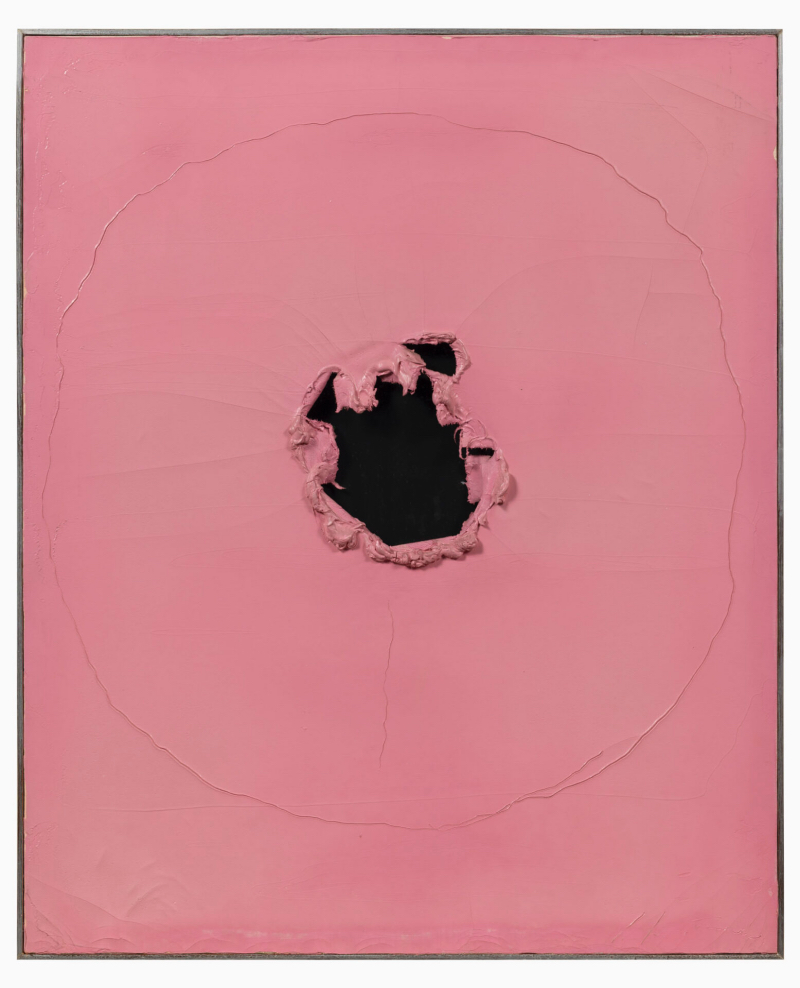
Lucio Fontana, Concetto spaziale, 1961, olio, squarcio e graffiti su tela, opera concessa in comodato dalla Fondazione Passarè, Collezione Museo MA*GA, Gallarate © Fondazione Lucio Fontana, Milano
Why visit the exhibition
Because it is rare to see an exhibition so rich in masterpieces, so well curated and so coherent in recounting a century of art through the eyes of a single artist. Furthermore, because it allows you to rediscover Kandinsky not as a textbook icon, but as a free thinker, in dialogue with Europe and capable of changing Italian painting forever.
What’s more, Gallarate is easily accessible and the MA*GA is a museum to keep an eye on: dynamic, attentive, always one step ahead.
Advance ticket sales are open from 1 October 2025 on TicketOne.
KANDINSKY AND ITALY
Curated by Elisabetta Barisoni and Emma Zanella
MA*GA Museum, Gallarate (VA)
30 November 2025 – 12 April 2026
If you love art that speaks to the heart and mind, this exhibition is for you.
Get ready to enter a world of lines, colours and silent revolutions.
I’ll be there. Will you?

Follow me on:
About me
In this blog, I don't explain the history of art — I tell the stories that art itself tells.