

Van Dyck: painter of the elite, portraits and timeless elegance
There are artists who paint faces, and then there is Van Dyck, who makes them eternal.
You know those portraits with intense gazes, slender hands, silk fabrics that seem to rustle and an aura of noble detachment? If you’re thinking of a specific portrait, it’s probably the work of Antoon van Dyck (1599–1641), who was not only the official portraitist of European nobility, but also a true influencer of pictorial elegance in the 17th century.
His style marked an era and set a precedent for centuries to come.
In this post, I will take you on a journey through his life, showcasing some of his most iconic works and sharing a few gems to share with your friends (art lovers, of course).
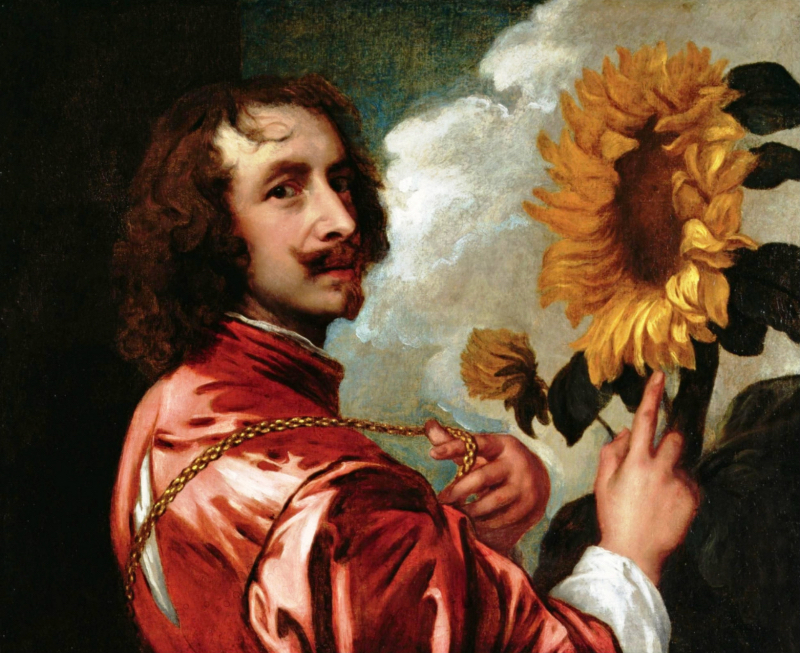
Antoon van Dyck, autoritratto con girasole
Van Dyck: painter of the elite, portraits and timeless elegance
Who was Van Dyck? It is difficult to answer this question, but he was certainly a precocious talent in the service of art.
Anthony van Dyck was born in Antwerp in 1599. The son of a wealthy cloth merchant, he grew up in a cultured and refined environment and began painting at a very early age.
At just 10 years old, he was already an apprentice; at 19, he was a master, and shortly afterwards, he became the assistant to none other than Peter Paul Rubens, the great Flemish painter and fellow citizen.
Imagine the scene: the very young Van Dyck alongside the most sought-after master in Europe.
A bit like doing an internship with Michelangelo Buonarroti.
Van Dyck had an edge over all the artists of his time: he was ambitious, curious and cosmopolitan. He travelled extensively, first to England, then to Italy, and at each stop he absorbed, studied and reworked.
In Italy, he was struck by the Venetian masters, especially Titian, and his palette became warmer, more sensual and vibrant. He then returned to London, where King Charles I welcomed him with open arms and appointed him “court painter”, granting him a noble title.
In short, Van Dyck became Sir Anthony and painted some of the most extraordinary portraits in art history.
Van Dyck’s most important works: portraits that seem like novels
Van Dyck is the king of portraits, and in his paintings you find not just a face, but a whole world.
Every detail, from the gaze to the clothing to the pose, tells a story, often one of power, desire or melancholy.
Here are some works to discover:
“Portrait of Charles I on Horseback” (1635): the proud and tragic King of England dominates the scene on a white steed. But behind that pride, one senses fragility: shortly thereafter, he would be executed.
“The Three Sons of Charles I” (1635): one of the sweetest and most moving portraits ever made, capable of speaking directly to the heart.
“Self-Portrait with Sunflower” (1633): a gaze that pierces the canvas, between pride and awareness. The sunflower? A symbol of loyalty… to the king and to art.
“Christ Crowned with Thorns” (1620): yes, because Van Dyck not only painted nobles and ladies, but also religious and mythological subjects, with a profound and dramatic sensitivity.
Many of his works are now in major museums: from the National Gallery in London to the Prado in Madrid, from the Louvre to the Uffizi.
A style that set a precedent
Van Dyck’s distinctive trait? Elegance, without a doubt.
In his portraits, the figures are elongated, the poses are natural but solemn, the light caresses the faces and fabricswith softness. He was able to combine the compositional strength of Rubens with the grace of Titian, creating a personal, refined and easily recognisable style.
His art is also psychological because we can read emotions, tensions and secrets in his subjects.
In short, he does not limit himself to portraying beautiful faces, but real people who speak to us even though they lived four centuries ago.
Even today, when we think of Baroque portraiture, we think (often unconsciously) of him.
Curiosities about Van Dyck
Van Dyck had a mobile studio. It seems that he travelled with a sort of portable atelier so that he could paint anywhere. In this sense, he was very contemporary because he conceived his work as we do today, when we can work anywhere with a laptop or smartphone.
King Charles I adored him. He gave him a house, a life pension and knighted him. It’s a pity that the monarchy didn’t last long… but that’s another story.
Van Dyck beauty filter. Not officially, of course, but many English ladies and gentlemen wanted to be portrayed “à la Van Dyck” precisely because he knew how to make them look… a little more beautiful. After all, since they were to be immortalised on canvas, they might as well look beautiful. Nothing different from what happens today with the use of “beauty filters” on social media.
He died young. At only 42, but he had already produced over 700 paintings. Van Dyck’s life was short but brilliant.
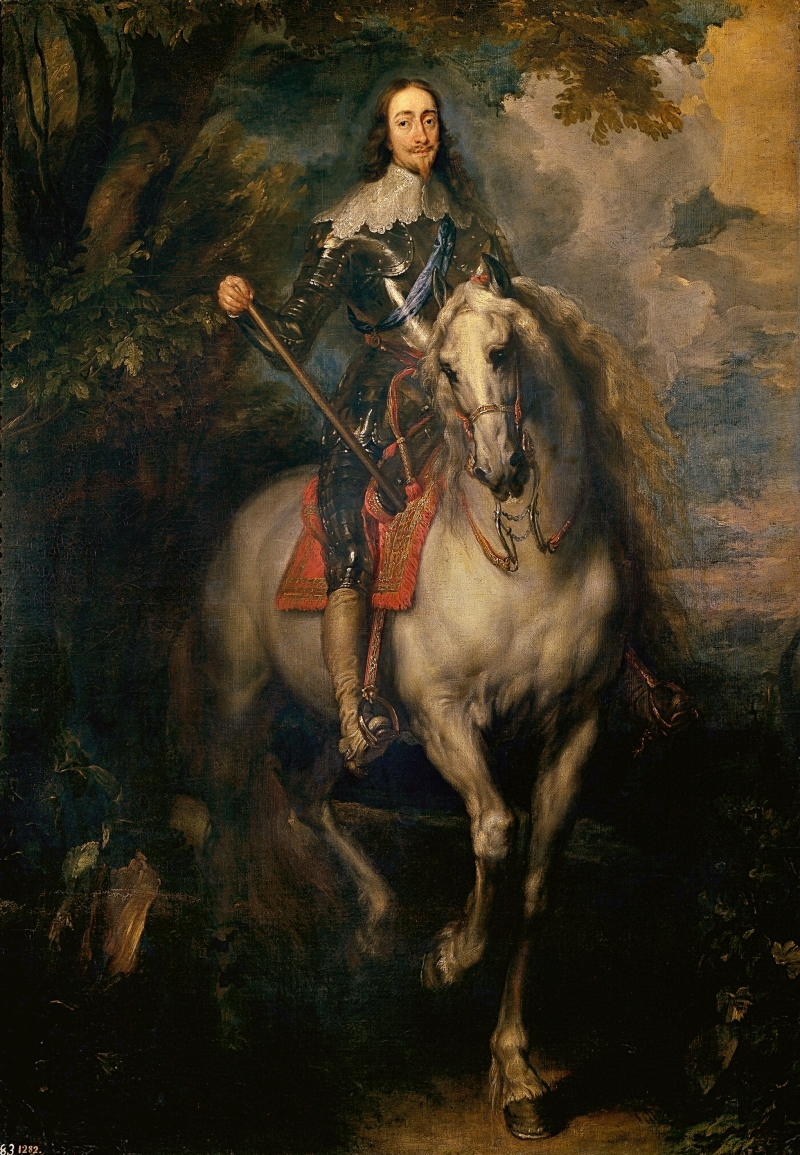
Van Dyck, Ritratto di Carlo I a cavallo
Van Dyck was much more than a court portraitist because he was able to capture people’s souls with a unique, profound and never banal touch. His style has influenced painters for centuries, and still enchants us today with its timeless beauty.
If you like faces, the stories hidden behind a gesture or a glance, if you love details and elegance, Van Dyck is an artist you cannot ignore.

Follow me on:
About me
In this blog, I don't explain the history of art — I tell the stories that art itself tells.