What is contemporary art today
‘Contemporary art is difficult’, ‘contemporary art just wants to shock but has nothing to say’.
These are some of the phrases you hear most often when talking about contemporary art.
It is true that since Duchamp’s Fountain appeared on the scene, art has changed and has never been the same again. We have talked about this many times on Facebook.
With this post, I would like to offer you some thoughts on contemporary art written by Alice Traforti.

Emiliano Zucchini: Void, 2017. Foto di Alice Traforti.
ARTE CONTEMPORANEA, COSA NE PENSATE ?
Last March, Simona Maggiorelli’s latest book was released: Attacco all’arte. La bellezza negata (Attack on Art: Beauty Denied).
I haven’t read it yet, but I hope to do so very soon because it brings new life to issues that I, in my own small way, deal with on a daily basis.
In the meantime, Caterina and I have read a short excerpt (you will find the link at the bottom of the post) that is full of ideas which, touching on different aspects, point the finger directly at contemporary art.
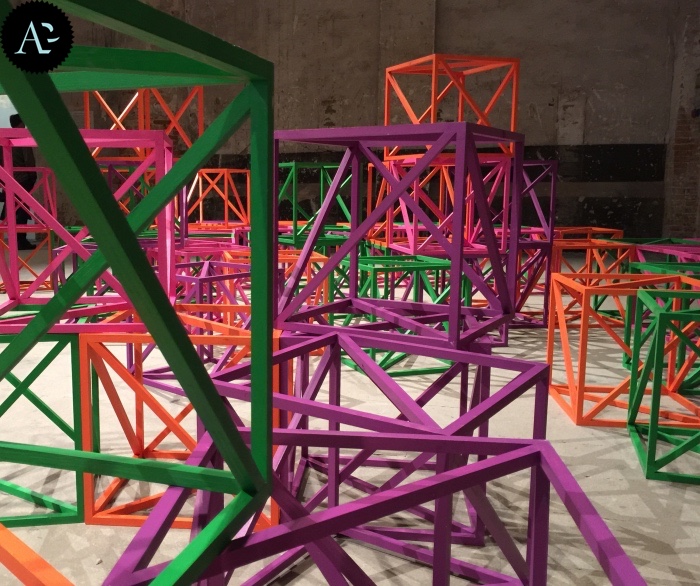
Zero to infinity, Rasheed Araeen, Biennale di Venezia 2017
These are, in my opinion, the salient points of the article.
- In the art business, the cult of the horrific is rampant today in various forms (here he cites Damien Hirst, Koons, Delvoye, Quinn).
- The technology used is often an end in itself and takes precedence over artistic research.
- The body (as a symbol of humanity) has been replaced by a cold and rational cyborg.
- We are witnessing a global phenomenon of expression that balances between extreme spectacularisation, which covers a significant void, and the exaltation of absence itself through sterile reproduction.
- The meaning of an image is closely linked to an underlying concept and can only be understood through rational explanation.
- Business prevails over research, standardising the aesthetic result.
- Contemporary art is a big scam dictated by finance.
The book also talks about other things, but I’m not here to discuss them.
Today, I don’t even want to talk about that healthy and authentic contemporary circuit that exists and survives (albeit with difficulty) in less exaggerated, more human and authentic contexts, closely connected to artistic research.
What I would like to understand together with you is the individual’s approach tocontemporary art.
We know that the institutional trend is to focus mainly on business art or the masters of the past. The most recent proposals usually concern artists who are already historicised and recognised.
The individual’s approach to contemporary production, whether emerging or more well-known, is positioned in more intimate and isolated circuits, which are not so difficult to find.
Contemporary art research exists, as do new proposals, you just have to want to encounter them.
I believe that the responsibility for this choice also lies with the individual.
If part of the contemporary circuit (public and private) runs on tracks regulated exclusively by profit and finance, it is up to the individual to seek and support the authenticity of an artistic expression that is emblematic of today’s society, however globalised, and a mirror of a shared subjective experience.
- What is art and what is not?
- What is contemporary today?
- What is the true value of artistic research and what is its economic and financial value?
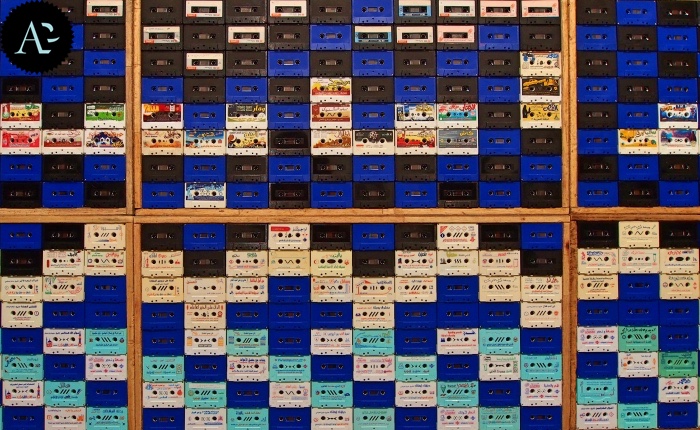
Food for Thought “Amma Baad”, Maha Malluh, Biennale di Venezia 2017

Damien Hirts – Punta della Dogana, Venezia

Carlo Bernardini: installazione per lo Studio Festival 2017 – Milano – Foto di Alice Traforti.

Follow me on:
About me
In this blog, I don't explain the history of art — I tell the stories that art itself tells.