Works in the public domain in 2026: what to rediscover and use
Every new year brings with it a small, silent revolution: works of art, films, texts and images that enter the public domain, finally becoming accessible, modifiable and shareable without copyright restrictions. 2026 is no exception, opening the door to a season of discovery, study and new creative possibilities.
Under US law, works published in 1930 are no longer protected by copyright, having exceeded 95 years since their first publication. In practice, this means that a fundamental part of 20th-century art now becomes collective heritage, ready to be reproduced, reinterpreted and shared. However, the issue is far from simple: museums, foundations and international dynamics make the boundaries of the public domain more blurred than they appear.
Despite this, 2026 represents an important symbolic and cultural moment, because it involves key figures from the historical avant-garde and pop culture of the 20th century.
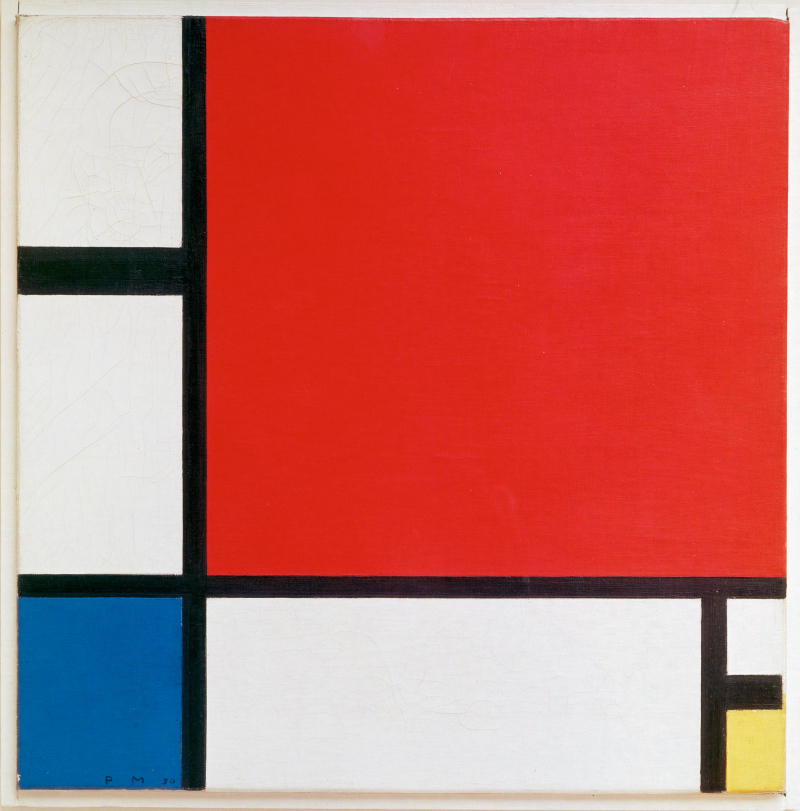
Composition with Red, Blue and Yellow di Piet Mondrian
From Mondrian to Buñuel, from Sophie Taeuber-Arp to Betty Boop: copyright-free masterpieces
Among the most iconic works entering the public domain this year is Piet Mondrian’s “Composition with Red, Blue and Yellow”, a manifesto of neoplasticism with its rigorous grid and primary colours reduced to the essentials. A painting that synthesises the utopia of a universal visual language, now finally usable without restrictions for editorial, digital and creative projects.
Another significant entry is Paul Klee’s “Tier Freund Schaft (Animal Friendship)”, an enigmatic work in which animals and signs intertwine in a poetic universe between childhood, abstraction and myth.
2026 is also the year in which one of the most fascinating female figures of modernity returns to the centre of critical debate: Sophie Taeuber-Arp. With her 1930 Composition, now in the public domain, there is a renewed opportunity to disseminate the work of an artist who broke down the boundaries between art, design and applied arts, anticipating the hybrid languages of our time.
Surrealist cinema and political murals: Buñuel, Dalí and Orozco
Not just painting. Among the masterpieces that are now in the public domain, L’Âge d’Or (1930), a film directed by Luis Buñuel in collaboration with Salvador Dalí, stands out.
A scandalous work, censored and banned for decades, it can now be restored, screened, remixed and studied without restrictions. A unique opportunity to reinterpret one of the pillars of surrealist cinema with fresh eyes.
On the other side of the ocean, another key figure in 20th-century art has become part of the collective heritage: José Clemente Orozco, with his Prometheus, a monumental fresco from 1930 created at Pomona College. This is the Mexican artist’s first major mural in the United States, charged with symbolic and political power.
Photography, comics and pop icons: Steichen, Blondie and Betty Boop
The public domain also includes some of the fashion photographs taken by Edward Steichen for Vogue, images that helped transform fashion photography into an autonomous, sophisticated and constructed language.
There is also room for pop culture with Betty Boop, an animated character created in the early 1930s as an ambiguous and provocative figure, later softened by the Hays Code. From today, her early appearances are freely accessible, offering inspiration for animation projects, remixes and critical reinterpretations.
Finally, Blondie, the protagonist of Chic Young’s comic strip, enters the public domain. From independent girl to perfect housewife, Blondie represents an evolutionary narrative of the role of women in American visual culture, waiting to be rediscovered.
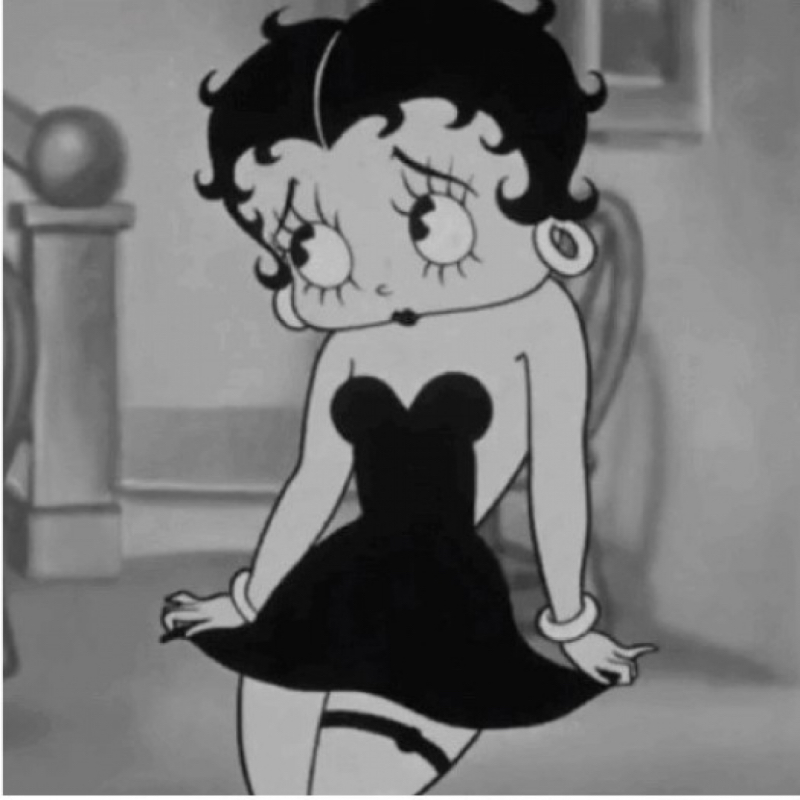
Betty Boop
What we can do today with works in the public domain
Entering the public domain means that works can be used freely, without having to ask for permission or pay royalties. They can be printed, shared online, reworked into creative, educational or commercial projects. Images can be used for covers, social media posts, merchandising or videos. Texts can be translated, reinterpreted, read aloud or staged, and in the case of films and music, they can be restored, edited, screened publicly and analysed without restrictions.
The public domain is a cultural treasure trove available to everyone. It is a heritage that allows us to keep works alive, transforming them from historical relics into active tools of knowledge, beauty and creativity.

Follow me on:
About me
In this blog, I don't explain the history of art — I tell the stories that art itself tells.