

The Uffizi Gallery works: the unmissable masterpieces
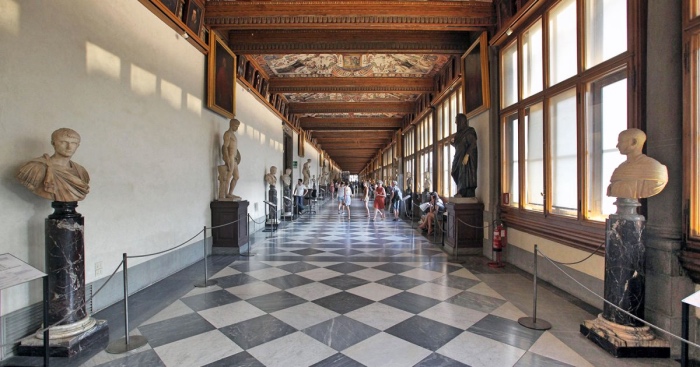
Florence is famous worldwide for being the birthplace of the Renaissance and for its museums, which house masterpieces by some of the most important artists of all time.
Among its museums, the most important and famous in the world is the Uffizi Gallery.
At the bottom of the post, you will find information on how to book tickets for the Uffizi and skip the line.
UFFIZI FLORENCE: WORKS NOT TO BE MISSED
The Uffizi Gallery in Florence houses the most beautiful art collection in the world, and the building that houses it is the first public museum in history.
The first time I went in, I felt like I didn’t have enough time to see everything I wanted to, but the second time I made a selection and focused only on the ones I consider unmissable.
In this post, I’ve collected photos of the masterpieces you have to see if you visit the Uffizi in Florence.
Filippo Lippi, Madonna and Child with Two Angels (1460-1465 c.).
This Madonna is delicate and beautiful, sitting on a throne with a soft embroidered cushion visible behind her.
Her gaze towards her child is sweet and melancholic at the same time, as if she already understood everything about her son’s destiny.
The window opening onto a seascape and the clothing and hairstyles inspired by the fashion of the time give this painting a new naturalness compared to other works of the same period.
Some scholars speculate that the model Filippo Lippi used to paint the Virgin’s face was Lucrezia Buti, the nun who became his wife.
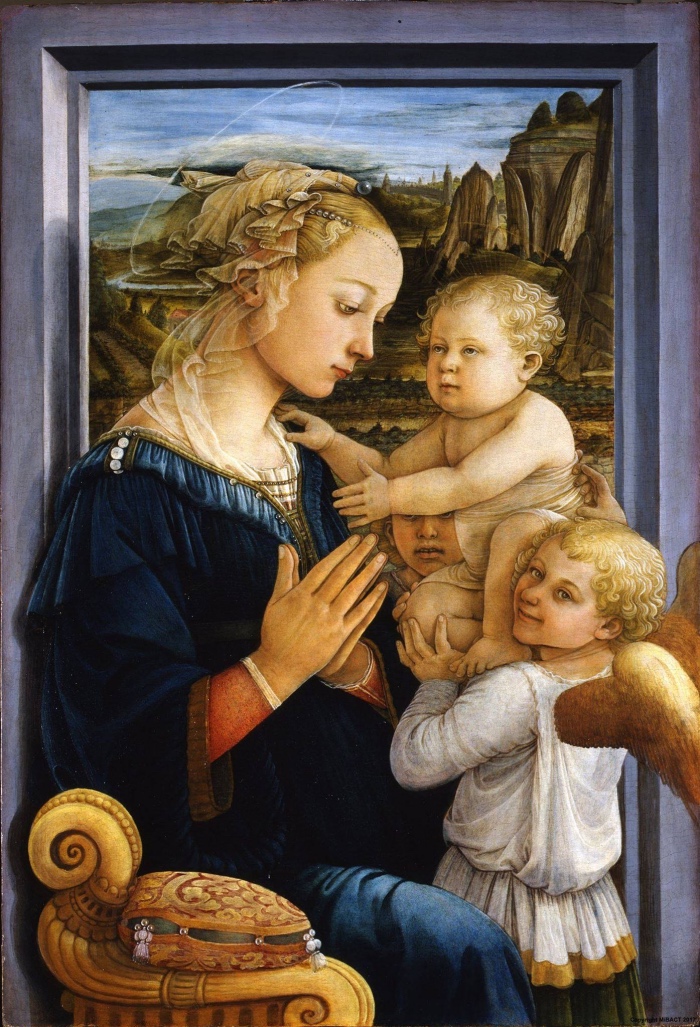
Filippo Lippi, Madonna col Bambino e due angeli
Artemisia Gentileschi, Judith Beheading Holofernes (circa 1620).
Artemisia Gentileschi is one of the best known and most appreciated Italian painters of the 17th century, who followed the Caravaggio school.
At a time when it was not easy for a woman to establish herself as a painter, Artemisia was the first woman to join the Academy of Arts and Design in Florence.
The daughter of Orazio Gentileschi, a painter of the Caravaggio school, Artemisia moved to Florence to escape the scandal in which she was involved in Rome after being accused of rape by the painter Agostino Tassi.
This dramatic event is documented in the trial records and chronicles of the time and is a symbol of the violence to which women were subjected for centuries.
In “Judith Beheading Holofernes,” the biblical heroine Judith, an example of virtue and chastity, is depicted cutting off the head of her enemy Holofernes, an Assyrian general whom she seduced while maintaining her purity.
The canvas was probably painted for Cosimo II de’ Medici and completed in Rome shortly after Artemisia’s return, after seven years spent in Florence.
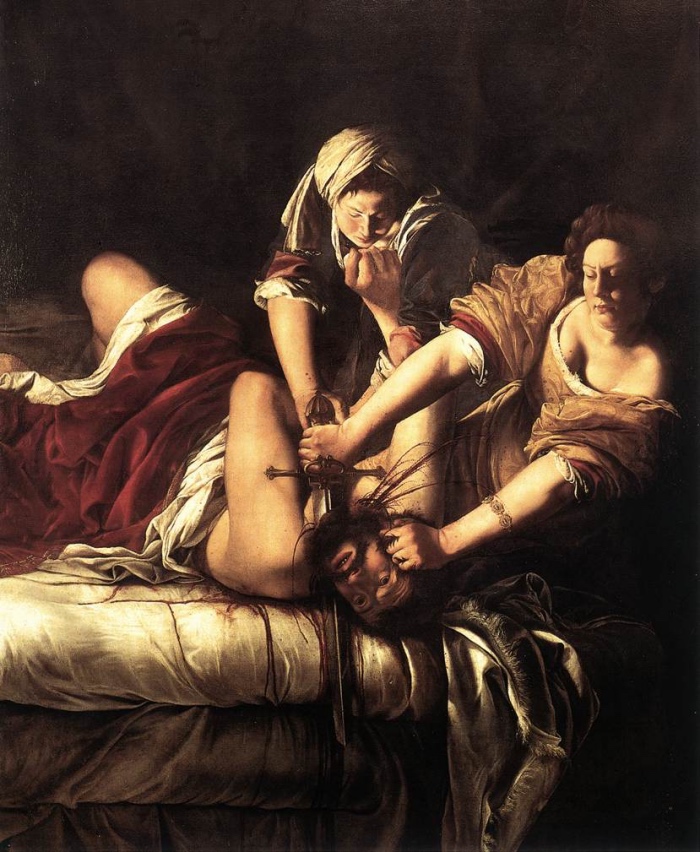
Artemisia Gentileschi, Giuditta che decapita OloferneAgnolo Bronzino, Portrait of Lucrezia Panciatichi (circa 1541).
Lucrezia belonged to one of the most influential families in Pistoia, an important branch of which settled in Florence in the 16th century.
This painting was done in 1541 by Bronzino and is kept at the Uffizi along with the portrait of Lucrezia’s husband, Bartolomeo Panciatichi, by the same artist. The painting was probably commissioned when Bartolomeo was admitted to the Accademia Fiorentina.
The portrait of Lucrezia is one of the icons of 16th-century portraiture, which became even more famous when Vasari praised the portraits of the Panciatichi couple, saying that they are “so natural that they seem truly alive, lacking only their spirit.”
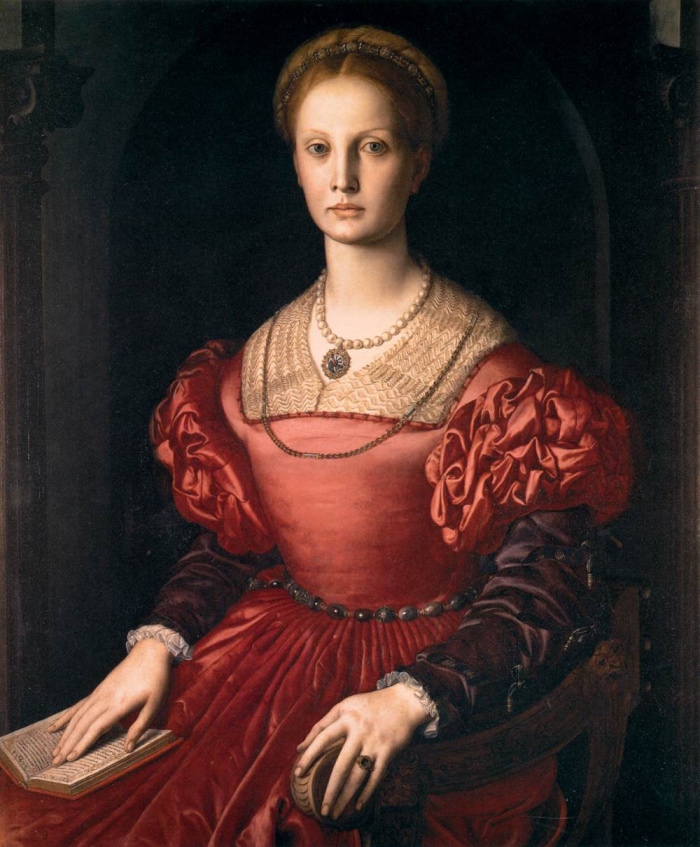
Agnolo Bronzino, Ritratto di Lucrezia Panciatichi
Rosso Fiorentino, Putto suonando (1521).
The work was long considered to be a single piece, but restoration work in 2000 revealed that it is actually a detail taken from a larger altarpiece.
The dark background conceals parallel engravings of steps on which the angel was sitting, probably at the foot of a throne depicting the Virgin and Child.
It is impossible, at least for the moment, to know which work this angel was originally part of.
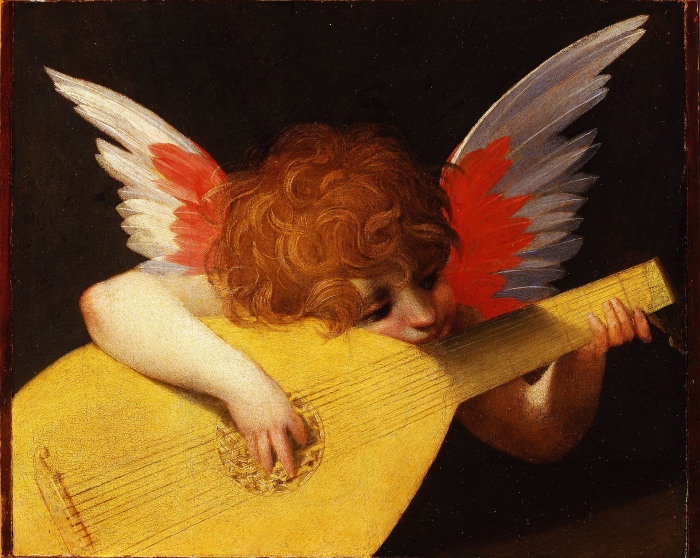
Rosso Fiorentino, Putto che suona
Caravaggio, Bacchus (1596-1597).
Caravaggio, the “cursed” genius who revolutionized painting in Italy and Europe in the early 17th century, is the protagonist of a room in the Uffizi Gallery, where his famous “Bacchus” hangs alongside other masterpieces.
Commissioned by his patron, Cardinal del Monte, as a gift for the Grand Duke of Tuscany, Ferdinand I, it was painted between 1596 and 1597.
The skilful use of color and oil technique, the incredible realism of the fruit basket, the young man’s complexion, and the transparency of the wine cup set a new standard.
Recent restoration work has revealed a man’s face inside the wine carafe, believed to be a self-portrait of the artist himself.
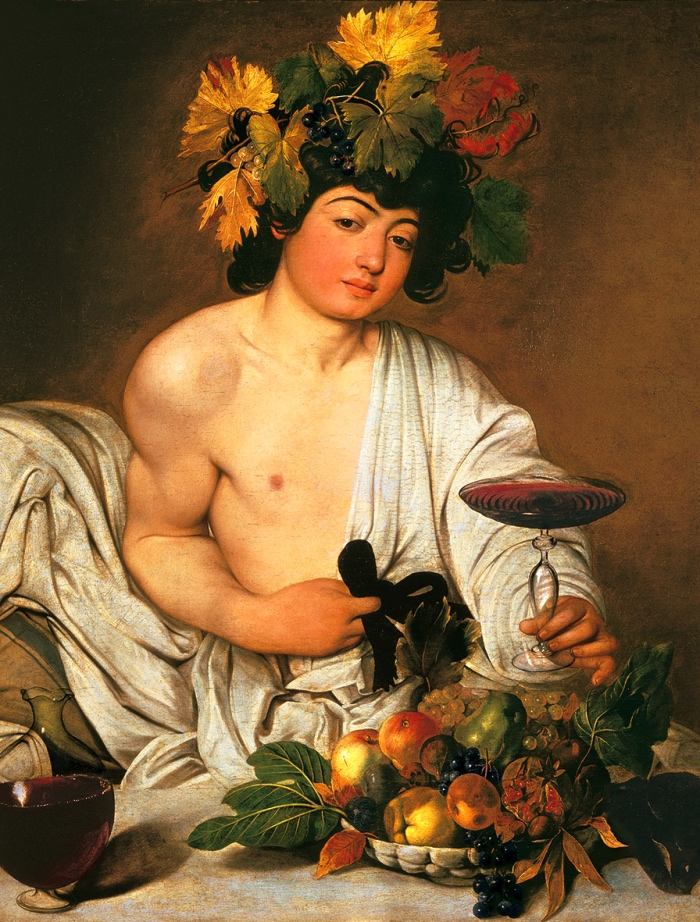
Caravaggio, Bacco
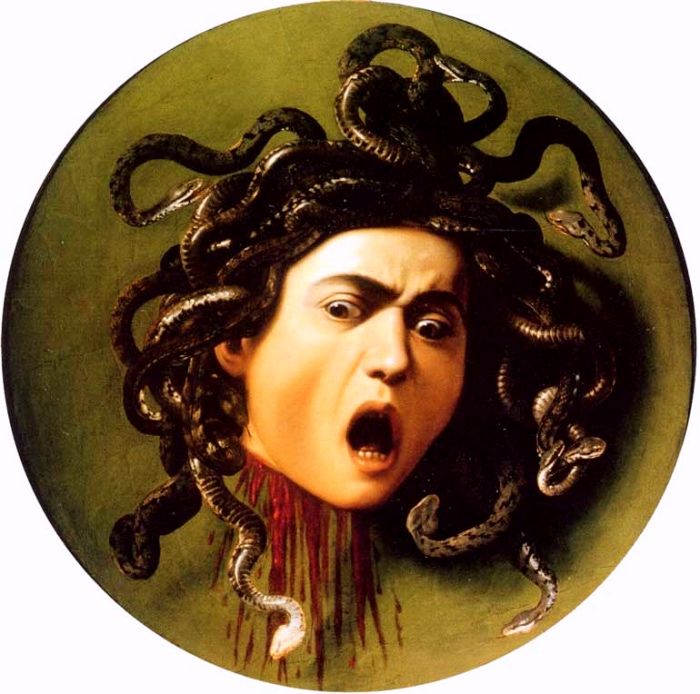
Caravaggio, Medusa (1598) detail – Uffizi, Florence.
Caravaggio paints a look of terror, a blood-curdling scream, snakes moving frantically, and a river of blood gushing from Medusa’s head.
Medusa was monstrous, turning people to stone, and Caravaggio paints her on a battle shield.
Not a real shield, of course, because this work was a gift from Cardinal del Monte (Caravaggio’s patron) to the Grand Duke of Ferrara, I de’ Medici.
Raphael, Portrait of Pope Leo X with Cardinals Giulio de’ Medici and Luigi de’ Rossi (1518).
This painting is linked to the marriage of Lorenzo, Duke of Urbino, to the French noblewoman Madeleine de La Tour d’Auvergne.
The wedding was celebrated in Florence in 1518 and Pope Leo X, the groom’s uncle, was unable to attend and sent this work instead.
The work was placed in the Medici Palace and historical documents refer to it as being “above the table where the Duchess and the other lords ate.”
Initially, the work contained only the portrait of the Pope, while the portraits of his two nephews were added later, possibly by Giulio Romano, Raphael’s most promising pupil.
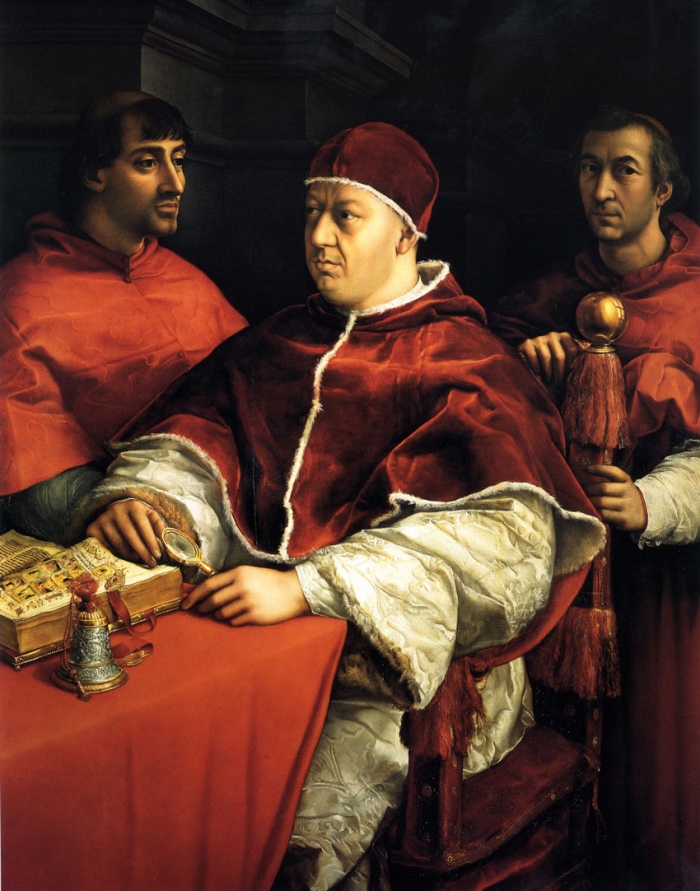
Raffaello, Ritratto di Leone X
The Venus of Urbino by Titian.
The Venus of Urbino is one of Titian’s most sensual works.
It was purchased from the artist’s workshop in 1538 by Guidobaldo della Rovere, Duke of Camerino, and was one of the most famous paintings of the 16th century. In fact, numerous copies and reproductions were made over the following centuries.
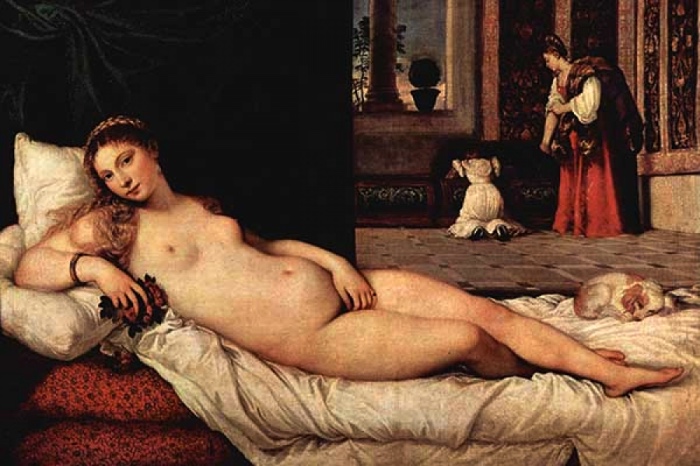
Tiziano, Venere da Urbino
Tondo Doni
The work was commissioned by Agnolo Doni, who wanted a representation of the Holy Family.
The importance and beauty of this painting lie in Michelangelo’s composition, which places Mary, Joseph, and the Baby Jesus at the center as if they were a sculptural group.
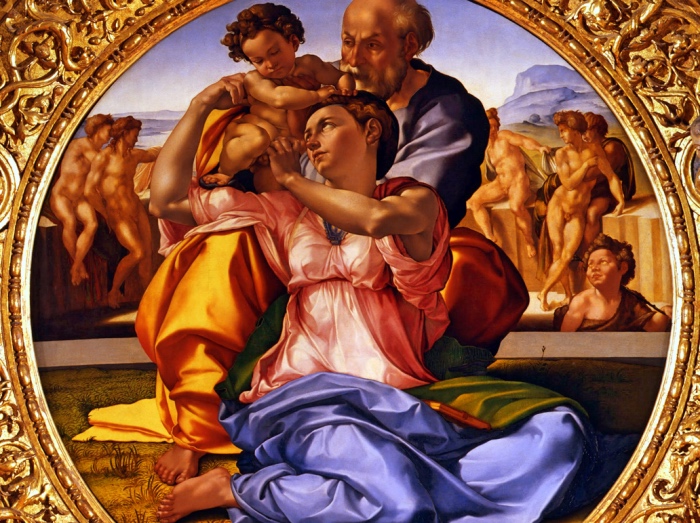
Michelangelo, Tondo Doni. Galleria degli Uffizi, Firenze.
Paolo Uccello, Battle of San Romano (circa 1438).
This painting is the central panel of a large triptych painted by Paolo Uccello in around 1438, now divided between the Uffizi, the National Gallery in London, and the Louvre in Paris.
The cycle illustrates the stages of the Battle of San Romano, which took place in 1432 between the Florentines and the Sienese and ended in a glorious victory for Florence. The work was painted for the wealthy Bartolini family, but by 1492 it was already listed in the inventory of Lorenzo de’ Medici, known as ‘il Magnifico’.
What makes this great cycle important is the experimental and daring use of perspective, which made Paolo Uccello famous among his contemporaries.
The part on display at the Uffizi depicts the unseating of Bernardino della Ciarda, a Sienese commander portrayed in the center of the scene with his white horse at the moment he is struck by an enemy spear.
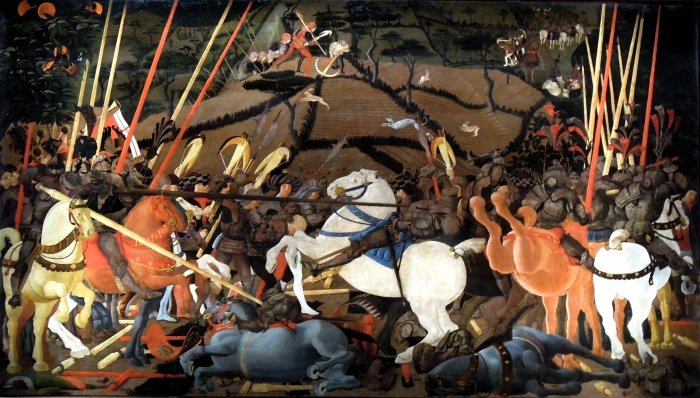
Paolo Uccello, Battaglia di San Romano
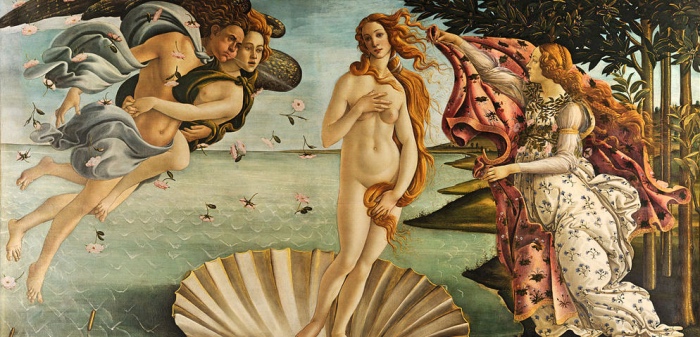
Botticelli’s Venus
One of the most famous works preserved in the Uffizi is Botticelli’s Birth of Venus.
The work was commissioned by Lorenzo di Pierfrancesco de’ Medici, cousin of Lorenzo the Magnificent, who was also the same person who had commissioned Botticelli to paint The Spring a few years earlier (dated around 1482).
Annunciation by Leonardo – Uffizi Gallery, Florence
Leonardo da Vinci’s Annunciation was originally located in the small church of San Bartolomeo a Monteoliveto, in the hills of Florence.
Leonardo probably painted the work while he was still a student in Verrocchio’s workshop, but it is a masterpiece that already reveals the brilliant talent of the young Leonardo.
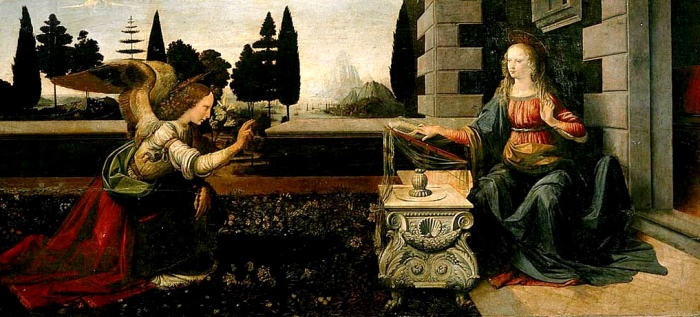
Leonardo Da Vinci, Annunciazione – Uffizi
PRACTICAL INFORMATION FOR VIEWING THE WORKS AT THE UFFIZI
To see all these masterpieces, I recommend booking your tickets for the Uffizi, to avoid the queue at the entrance and not waste precious time waiting in line.
The Uffizi Gallery is located in the historic center of Florence and is very easy to reach.
The reference point for getting there is the Piazzale della Stazione Centrale di Santa Maria Novella.
From here, it is only a ten-minute walk to the Uffizi.

Follow me on:
About me
In this blog, I don't explain the history of art — I tell the stories that art itself tells.