

Giorgio de Chirico works and curious facts
DE CHIRICO WORKS: WHICH ONES YOU SHOULD KNOW AND WHERE TO SEE THEM
Giorgio de Chirico, works and curious facts of an unconventional artist.
Which are the masterpieces you should know and where to see them?
In this post I’ll try to answer these questions with a selection of works representing the highest point of the painting of the artist who was the leading figure of Metaphysical painting.
de Chirico works
WORKS BY DE CHIRICO: 5 MASTERPIECES TO KNOW
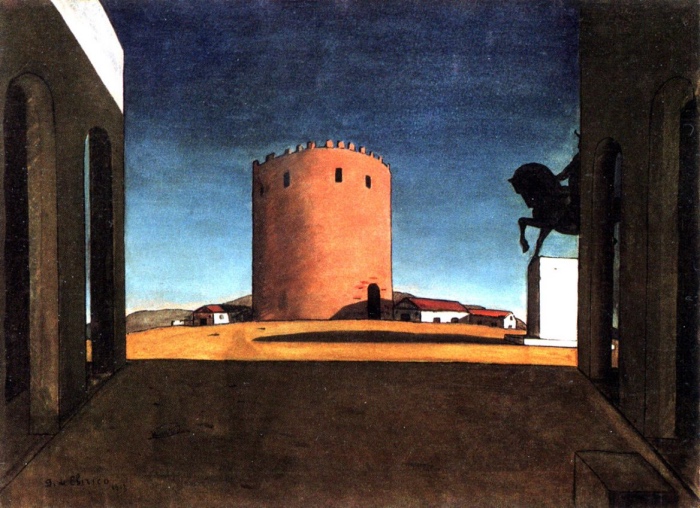
The Red Tower (1913) – Peggy Guggenheim Collection, Venice
The theme of the piazza (square) often appears in de Chirico’s work, which represents a timeless space and where enigma seems to be the only certainty.
The deserted and silent landscape seems to foretell that something is happening or offers us the possibility to observe for a long time a place where an event has already happened. Wait and mystery are the great protagonists of works like this, where classical architecture, long shadows and unreal light shroud all the space and leave the observer in complete solitude.
The Nostalgia of the Infinite (1912 – 1913) – Museum of Modern Art, New York
The element of the tower often appears in de Chirico’s works and in this case it’s the architectural element in the foreground, below which are two small and mysterious figures.
The light source comes from the right side but we don’t know who or what produces it. Only the two figures in the centre of the scene can know what generates a light which is so intense.
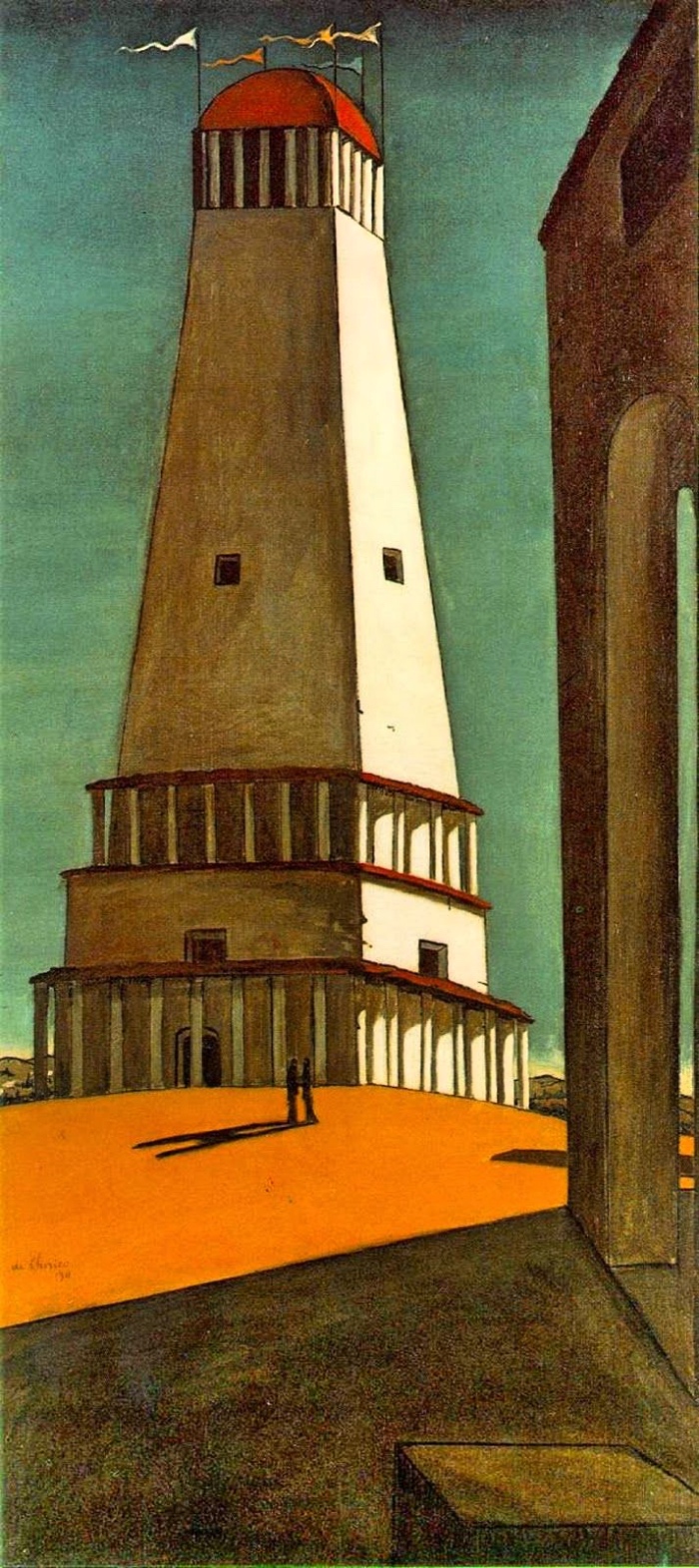
The Nostalgia of the Infinite (1912 – 1913) – Museum of Modern Art, New York
Portrait of Guillaume Apollinaire (1914) – Museum of Modern and Contemporary art Centre Georges Pompidou
The artist painted this portrait of his friend Apollinaire, who was important in De Chirico’s life, in 1914, and it is considered a premonition of the wound the poet suffered in the war in 1916. In fact, the title of the work was initially different and was changed after Apollinaire was shot in the temple.
Apollinaire is depicted with a marble head wearing sunglasses, evoking the figure of a blind classical statue.
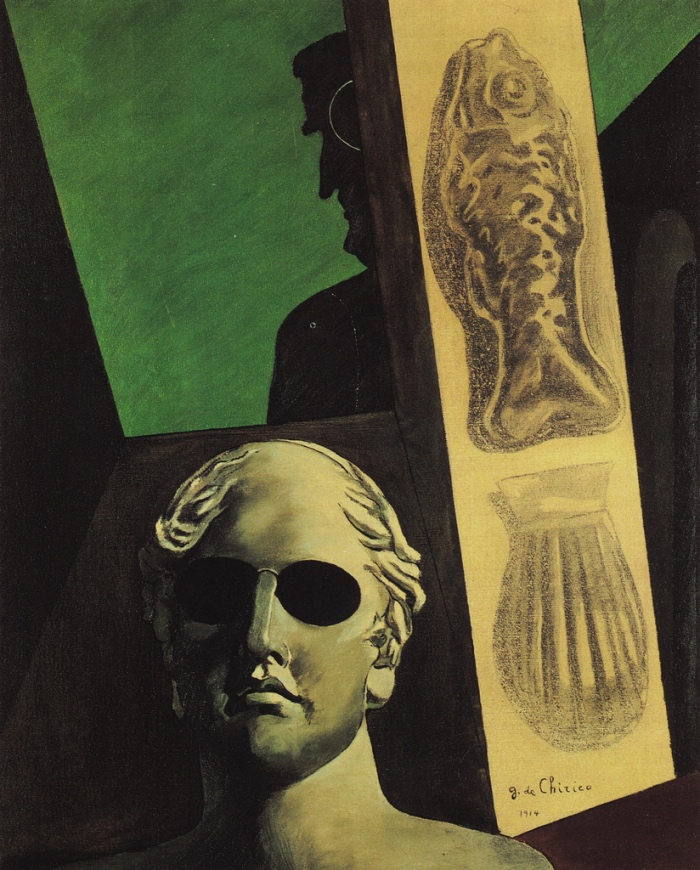
Portrait of Guillaume Apollinaire (1914) – Museum of Modern and Contemporary art Centre Georges Pompidou
Hector and Andromache (1917) – National Gallery of Modern Art, Rome
The mannequin of de Chirico’s works is a symbol of his painting.
It’s a figure recalling the world of tailoring and, in fact, the artist painted sartorial and faceless mannequins in his works, an object reproducing the human being who is emotionless.
De Chirico actually plays with this element, and painted mannequins similar to puppets, which seem to come to life with inquietude for a condition which condemns them to solitude.
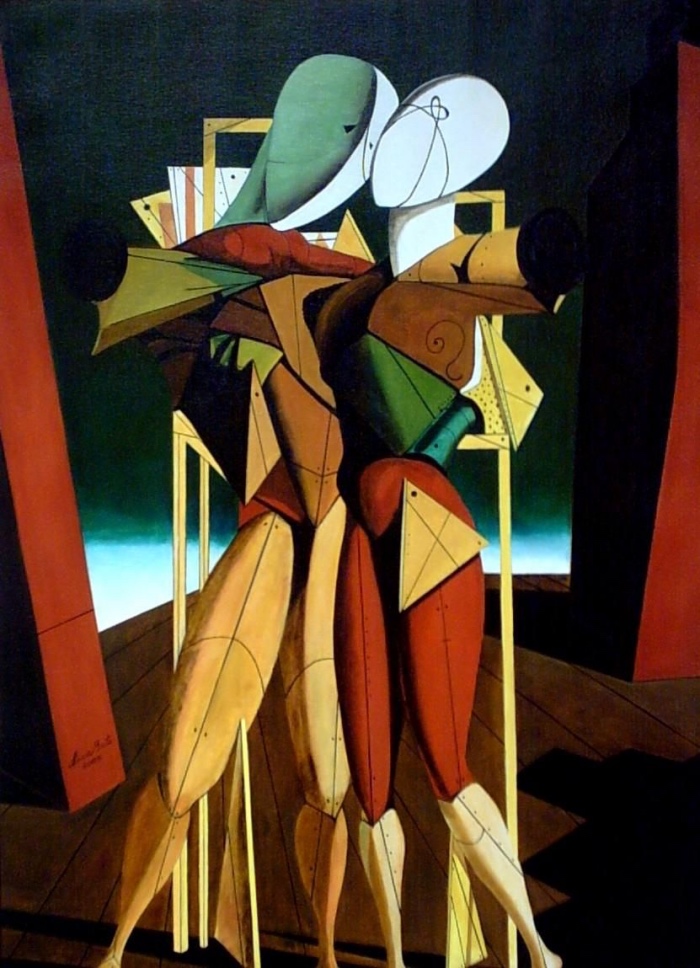
Hector and Andromache (1917) –National Gallery of Modern Art, Rome
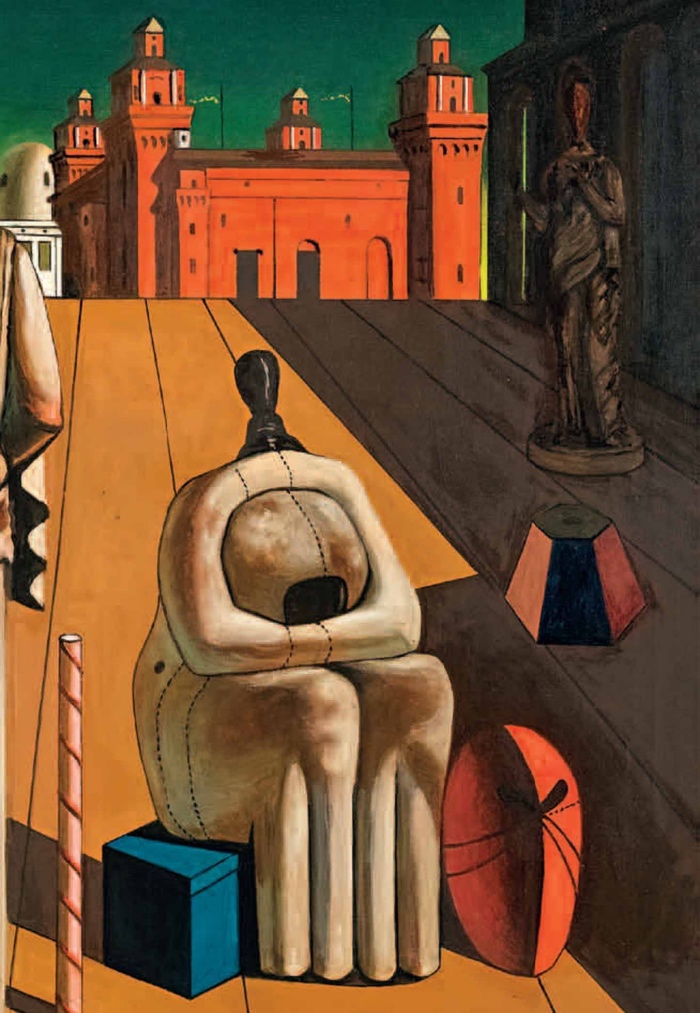
The Disquieting Muses (1918) – Private Collection
This painting is the symbol of the 20th-century art, and is Giorgio de Chirico’s absolute masterpiece.
It’s the manifesto of Metaphysical painting and which an impossible landscape, depicts a reality suspended between dream and nightmare, in which the observer may find peace or inquietude.
In the background stands the Castello Estense in Ferrara, the city where de Chirico in 1917 met Carlo Carrà, De Pisis and his brother Savinio, with whom the artist would found the Metaphysical art movement.
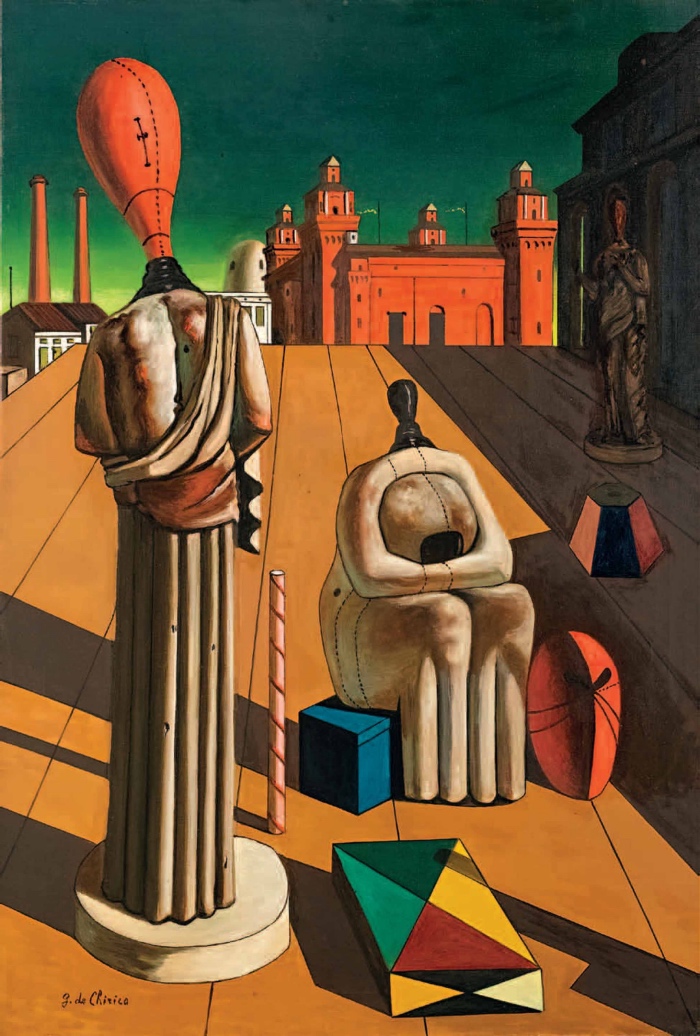
The Disquieting Muses (1918) – Private Collection
🖌️ This article was published in 2019 and was updated on January 4, 2026 with new facts, insights, and useful links.
Leave a Reply

Follow me on:
About me
In this blog, I don't explain the history of art — I tell the stories that art itself tells.